|
|
|---|


Showing posts with label Minghella. Show all posts
Showing posts with label Minghella. Show all posts
Friday, 15 July 2011
When Tom Ripley travels to Italy to procure Dickie Greenleaf (at Mr. Greenleaf’s request) he must decide on a way to inject himself, smoothly, into the lives of Dickie and his girlfriend Marge. Truly, each time I see The Talented Mr. Ripley I love it a little more. Even though, The English Patient is my favourite Minghella film there’s an inimitable style to The Talented Mr. Ripley. This shot of Dickie and Marge soaking up the sun is a brilliant example.

As far as enjoying the sun goes, I wish we could all look as good as Dickie doing so (and have Gwyneth Paltrow on arm, to boot).


Monday, 6 June 2011
So, the marathon ends and with it comes my gift to you, which is about as selfish as I can get – review of my favourite film. It functions as a gift, though, an incredibly late one – but alas. C’est la vie.


 The English Patient depends on Ralph Fiennes to be the centre of the story. It is his story afterwards. The Count seems to be the role that fits him perfectly – a coldness that is not apathy but just stillness. He spends half of the film in extensive makeup existing as his extensive burns, and yet he never plays the Patient as a victim. Fiennes has always been an extensively subtle actor (sometimes misconstrued as blandness) and thus, the role of Almasy fits him like a glove. We see him raise his voice only twice – the first time at a drunken dinner, the second after a fateful run-in with some soldiers. It’s this very sereneness that draws Katherine to him. Her first words to him are, “I wanted to meet the man who could write such a long paper with so few adjectives.” He’s so obviously disconcerted by being under scrutiny, and he winces almost imperceptibly. Then he replies, “A thing is still a thing, no matter what you put in front of it. Fast car, slow car, chauffer driven car…still a car.” Katherine’s combative argument? “Love. Romantic love, filial love, platonic love. Quite different things, surely?” We’re being given clues this early on; it’s Almasay’s inability to distinguish between things which becomes the cause of his undoing, and for Katherine it’s her over attention to detail which becomes hers.
  It’s an expansive cast, and I’m especially partial to Juliette Binoche (one of my two favourite supporting actress winners) but a significant portion of the film depends on the rapport between Kristin Scott Thomas and Ralph Fiennes. They both exude that, somewhat trite, stiff upper lip that comes to be considered akin with Britons. I’m susceptible to the british, most of you know that, but that’s not why I think that Katherine Clifton and Laszlo de Almasy are encapsulation of Scott Thomas and Fiennes at their best. They evoke a quiet tenderness that immediately zeroes in on the profundity of this relationship, even before it begins. There’s a beautiful scene where the two are trapped in a vehicle during a sandstorm. Almasy doesn’t whisper sweet nothings in her ears, instead he’s telling her about African meteorology. But the moment is marked by a softness that you feel like you can reach out and touch; and in one of the film’s most understatedly beautiful and devastating moments Katharine reaches out to the paint on the window as we segue into the patient’s face and it’s almost as if she’s reaching across time. That’s how powerful their relationship seems, that’s how real the images evoked seem.
There’s something incredibly tactile about the production of The English Patient. I’m wary of using a word like masterpiece, because I know that I’m hardly the least nepotistic critic – I have an agenda here, after all. But, it’s important for that illusion of the film’s setting seeming corporeal because the grief that bounds the characters together must seem as palpable. It’s anyone’s guess why the concept of love stories have become so reviled, but The English Patient is a love story although the kind of love is debatable. Just as Katherine ruminates on the aspects of love so the film depends on moments of affection – sometimes lost in pain. There’s so much delicacy with the way in which Juliette Binoche plays Hana as almost a revelatory open person but she’s carrying those battle scars with her. Her act of caring for the wounded is only a way to eschew her own troubles. There’s almost franticness evident in the way she plays hopscotch alone or chops off her hair without even paying attention. The sweetness of that first meeting with Kip (Naveen Andrews is perfect here), which is easily one of the film’s most natural moments, conceals the desperation in this woman who literally laughs at the promise of death.
 Maybe I love The English Patient so much because it’s saturated with subtext upon subtext. It is a story of love, but it is also a story of war. “It’s a war, when it’s a war where you are becomes important” – it’s another of those lines that’s easily ignored but if anything it’s one of the biggest clues as to the Patient’s countenance when he replies, “I hate that.” Minghella is often accused of pushing his agendas through film, and perhaps it’s not absent here since the film closes with Katherine’s lovely We are the real countries not the boundaries drawn on maps monologue. The idiosyncrasies of the characters are what makes them perfect for each other, and unable to exist in unison. Minghella (he writes the screenplay as well as directs it) is careful to not paint any party as villainous. Even as Katharine and Almasy luxuriate in their romance, her husband waits in the car for a forgotten anniversary dinner. Everything shifts when you put it into different perspective so that the ostensible importance of “world affairs” seems skewed. It’s why I have faith in Minghella’s sincerity. “Betrayals in war are childlike compared with betrayals during peace. New lovers are nervous and tender but smash everything, for the heart is an organ of fire.”
So true, and so beautiful.


Thursday, 14 October 2010
 I vaguely remember in the wake of the, somewhat, mixed reactions to Nicole Kidman in Cold Mountain a slew of bloggers suggested that Natalie Portman would have been a more ideal choice for Ada Munroe. I’ve never read the book, so I can’t say anything about the translation to screen. I am a big fan of Anthony Minghella, and Nicole Kidman so I loved Cold Mountain. It’s nowhere near Minghella’s best, but it’s admirable – and its cast is top-notch.
Even if I don’t cherish the prospect of young Ms. Portman as Ada I do appreciate the performance she gives in the film as a young woman who Inman meets on his journey. Like any story divided in two one take precedence and Ada and Ruby are more interesting that Inman’s trek across the country – even if Jude Law is brilliant. But the moment where his journey gets most poignant is in the scene with Sarah. I’m vaguely fond of Portman, but I’m not wholly bowled over by her talent. Case in point, I think she’s fine in Closer, but still the least impressive of the quartet. When it comes to taking small roles and making them memorable her incarnation of Sarah ranks at the top. Everything in those few moments works in a way that I don’t expect. We are salivating waiting for Inman to reach Ada but for that scene we’re completely focused on Sarah.

It’s the type of role I’d like to see Natalie tackle. My excitement for Black Swan is slightly tamp though I’m still anxious to see Portman hold down an entire film. Perhaps the role of a woman waiting at home for her husband to return from war is generic, but an inspired writer could always do wonders with the story. It would be a fine piece for Natalie to tackle, she’s the sort of actor who’s good when pushed but is easily lost in the shuffle in an ensemble. I wouldn't mind seeing her headline something like this.
Previously
Meredith Logue and Tom Ripley continue their journey in The Talented Mr. RipleySaturday, 28 August 2010
It seems each time I start thinking about The Talented Mr. Ripley I get obsessed with writing about it. Watching it yesterday I still think that each member of the main quintet should have walked away with Oscar nominations – but I’m greedy like that. I gave you my pipe dream last week for a prequel about the life of Marjorie Mellor before she became wife to Jack and mother to Jenny and now I’m thinking about another sequel for The Talented Mr. Ripley. As brilliant as Gwyneth Palthrow is (and she really is) I can’t help being interested in Cate’s Meredith Logue whenever she appears on screen and Matt Damon and she have such good chemistry together. Earlier in the week I spoke of the ending and it’s implications for Ripley – a life of loneliness. Yet, what happens after? Does Tom (aka Dickie) ever meet Meredith again? Imagine the sort of film that could be.

Of course, Anthony Minghella is no more – he wrote and directed the actual film, but I’d still like to see Cate and Matt team up for a sequel picking up ten years after the credits rolled. I think Sam Mendes could do a nice job of handling it, even if he’s never done anything quite like that. Who knows what will happen? Perhaps Tom will eventually kill her too, but it’s sort of odd that Cate who seems to work with everybody hasn’t worked with Matt since. Maybe they’d go to another location, who knows? I just know I’d like to see more of Tom Ripley, and the actual book was a series of book so I’m sure there are loads of adventures he could get himself into.
Would you be interested in seeing more of Tom Ripley? Who would you put to direct?
Friday, 27 August 2010
I’m working on a review of another Minghella film, and after touching on his The Talented Mr. Ripley for the Movie Meme yesterday I felt like watching Cold Mountain. In retrospect I suppose that Cold Mountain’s chancing of a genuinely warm reception were sunk before it was even released. The golden age of Miramax was at a peak coming off the banner year that was 2002 for them, Nicole Kidman and Renee Zellweger were two cinema’s brightest stars, and Jude Law was no black hole himself. Truthfully, I resent the way that’s Cold Mountain is remembered today because I really do like it. Is it the shameless attempt for Oscar glory that it’s advertised at? Tough question. Perhaps…but that doesn’t really say much.

Cold Mountain is two stories in one. On one side of America Ada Munroe is working on keeping her spirits up as she waits for a man she never really knew to return home. She’s befriended by an intrepid drifter, Ruby Thewes, and together the two start to work on Black Cove farm. On the other side W. P. Inman is making his way back to Ada after having deserted his troops in the Civil War. Cold Mountain is one of those infuriating love stories that have the couple in question apart for the majority of the film. I’m sure I wasn’t the only one seduced by the possibility of Jude and Nicole together, even though they’re more often than not apart. Really, Cold Mountain’s never really a love story. Some other (potentially clichéd) maxim would probably do it more justice – finding your true selves, overcoming odds; etc.

It’s strange, somewhat, when Cold Mountain came out Nicole Kidman was immediately forgotten in favour or Jude and Renee. Granted, she’d just recently won the Oscar (deservedly) for her work in The Hours but she’d easily have displaced three of the actual nominees that year. Today, Renee Zellweger’s win is regarded as one of the Academy’s largest travesties. I chuckle at that one. I don’t know if that’s the reason that she seems to be so hated now, but it seems silly. I like Cold Mountain, and generally everything about it and I don’t find her performance offensively bad – I don’t find it bad at all. But I’m digressing…there’s no point in turning this into an entry for defensive cinema.

At its heart, it’s a war story in the best of – and worst of – ways. But for a few random moments it never goes to the forefront of battle – and even those aren’t particularly significant, but it shows the effect that war has on a small town, the effect it has on its people, especially those left behind. It’s adapted from a novel, and that makes it that less subtle when it comes to touching on the important issues, but that doesn’t make me any less fond of it. It’s on the nose, but in a good way. There’s a scene where Ruby stands in a bar, “They make the weather and then they stand in the rain and they, ‘Shit! It’s raining!’”. In all its obviousness it’s a perfect summation of war and its effects. It’s a bit of a departure for Minghella in some ways, because Cold Mountain is decidedly more sentimental than anything I’ve seen from him before. I’m willing to admit it spends about thirty minutes settling into itself as it should – but I forgive it those strange moments because even in those odd moments where the story seems to falter it’s only innocuous. The film is still technically proficient. The main trio are good, but Kathy Baker, Philip Seymour Hoffman, Brenda Gleeson, Donald Sutherland and Natalie Portman and Jena Malone in brilliant cameos do good work too. No one ever thinks of Cold Mountain in terms of an ensemble cast, but it is. And it has one of the most brilliant scores of the decades, backed by beautiful music from Alison Krauss. Perhaps, general nepotism makes me fond of it but I often think that Cold Mountain’s not given enough credit.
What did you think of Minghella’s final epic?
Thursday, 26 August 2010
Freakishly weird…what exactly does that mean? An ending that was inadequate? One that I didn’t see coming, one that was bizarre…some endings deliberately try to shock you and make you go “a-ha”. Most often they fall flat, it wasn’t that I didn’t see this ending coming – I didn’t – the delivery of it was just eerie – brilliant – but weird.
SPOILERS – obviously (Haven’t seen it? Don’t read it)

Unlike the runaway for The English Patient Minghella’s 1999 masterpiece The Talented Mr. Ripley wasn’t wholly loved (REVIEWED). Based on the eponymous novel it tells the story of the nefarious body snatcher (not literally of course) Ripley, played excellently by Matt Damon in probably his best performance. Ripley is at first infatuated with Jude Law’s deliciously mean Dickie Greenleaf, but eventually he murders him when Dickie gets tired of his friendship. He adopts Dickie’s personality for some time before having to kill again. Along the way he meets Meredith Logue (Cate Blanchett in a beautifully understated performance). After convincing most of his innocence in Dickie’s disappearance he makes his way out of Italy on ship with Peter, a mutual friend of Dickie’s who Ripley may, or may not, start a love affair with. Unfortunately, Meredith Logue is on the ship – she still think he’s Dickie, and so is Peter. He can’t kill her, she’s with her family – but he can’t be revealed so in the final scene Tom kills Peter. It’s more than a rote killing because he does love Peter, but he loves his freedom more so as Peter tells us all the great things about Paul Ripley we see him sitting in the dark and hear the murder as he begins to cry tearfully and the screen fades to black. No ending will be creepier, even if they try more overtly. I’m repulsed, fascinated and moved by Ripley’s plight, which he of course brought on himself – that ending is definitely something special.
Am I the only one who was creeped out by this?
(More of the MEME)
Sunday, 22 August 2010
This entry is part of the blogathon on moments in the rain, cinematically.
As soon as Jose suggested the idea for this semi-blogathon my mind went to Juliette Binoche. It’s probably because I’m in all types of love with The English Patient, but it’s always the first film that comes to mind when I think of rain and movies. It’s a tad ironic considering that at least half of the film takes place in the sweltering desert. I’ll be reviewing The English Patient sometime soon, it’s a rather dismal tale at times but somewhere, three-quarter way through the epic, the eponymous patient who’s severely burnt yearns for rain on his face. As fate would have it, the rain comes and as we listen to Ella Fitzgerald croon and as Naveen Andrews, Kevin Whatley and Willem Defoe cart the immobile Ralph Fiennes around the fountain and the jovial Juliette Binoche tags along just to be silly it makes you forget that we’re watching an Anthony Minghella tragedy…

The scene in question occurs midway through the film, even though – if pushed – I’ll single out the desert portion as my favourite of the film this portion that I adore takes place in the Monastery. It’s just after one of the film’s symbolic climaxes; Naveen Andrews’ Kip is called to defuse a bomb that – literally – has his name written in the serial number. Hana (Juliette Binoche) has a bad feeling about the day and bicycles down to the well. The bomb is defused just as the news reaches Italy – the war is over. It’s over the embrace of Kip and Hana (before the rain) that “Cheek to Cheek” begins to play.

I’ve never heard the song without thinking of the rain since…and Ella's version is the best.
We get a beautiful shot of the dark sky.

Then we cut to Juliette, in her same nondescript house drench – drenched in rain – but still beautiful.
HANA: It’s raining.


It’s the only dialogue in this scene, the chapter in the DVD is titled just that – “It’s Raining”. Immediately after the line she laughs like a silly schoolgirl – which, trained Nurse or not, Hana is like many times. To offer some perspective, she’s taking care of eponymous Patient – Ralph Fiennes. His body is thoroughly burned and he’s bedridden and after being found in the desert by some Arabs he’s been moved to the Monastery with Hana watching over. Earlier in the film he tells us that he longs to feel the rain on his face…he gets his wish.
The rain is so obviously a thing of cleansing – so many of the posts have touched on that. It’s the single moment of complete abandon in the film, Kip’s eventual departure, the Patient’s potential death, Carravgio’s thievery and missing thumbs – none are of consequence at the moment. The war is over and the rain is falling. There’s really nothing to do but take the patient out and run around the fountain.

Theoretically, nothing is added in this scene. No new ground is travelled, no new depth is found – but that’s the point, I think. The English Patient is drowned in it’s pathos. In fact another scene of rain – well, raining sand – is almost indicative of the film itself as Almasy (the Patient before) and Katherine is almost drowned in a sand storm. But, in italy, when the storm comes – of water – it’s not dangerous. Like the sandstorm, though, it does bring our characters a little closer. It’s not a seismic event but something as transient as rain and the fun to be had in it can be important. It’s immediately after this scene that we’re pitched back into the bleakness of reality. One of the very characters dies a few hours later, but none of that matters in the rain. There is no logic as the three men lift the patient around the fountain, there’s no sense in Hana carrying an umbrella that serves no purpose…but it’s beautiful to watch, John Seale's cinematography is just lush and as the song says – “and the cares that hung around me through the week, seem to vanish like a gambler’s lucky streak” but only for a moment though.
Still, whenever I think of rain I think of the 4 minutes in The English Patient when reason was eroded for the pure abandon of a few drops of rain.
(I’ll post the full list of Wet Entries tomorrow morning.)
Friday, 11 June 2010
I like to have my own weird ideas of continuity, so it makes sense that my final entry in Forgotten Characters* will be a continuation of the original entry. So many months ago I covered a performance that I would have given an Oscar nomination to from an excellent 1999 entry. It is weird how one exceptional could manage to have so many excellent – and forgotten performances. I’ve been having this woman on my mind for some time, so it makes sense…
Gwyneth Palthrow in The Talented Mr. Ripley

As Marge Sherwood
Gwyneth really impressed with that 1998/1999 one-two punch of Viola DeLesseps and Marge Sherwood. It’s also more than a little ironic that she was once again in direct contention with a certain Ms. Blanchett. Marge plays the girlfriend to Dickie – Jude Law in a performance for the ages. When the duplicitous Tom Ripley wheedled himself into the duo he becomes a contented confidante to both Dickie and Marge and it’s the portion of the performance where Palthrow thrives. With it’s obvious feeling of overt darkness in the latter portion, there’s something oddly enticing about the film’s first half and Gwyneth is a large part of that. It’s easy to think she’s doing too little but it’s just her character of Marge (an excellent one, I might add). She manages to make Marge’s inclination to Tom unromantic and believable and perhaps it’s this reason that her performance in the second half doesn’t hold up quite as excellently.

The only false note I can find in the performance is her hysterical confrontation of Ripley towards the film’s end which is not exactly her fault – it’s also Minghella’s only false note, and I forgive her for it nonetheless because she’s so willing to portray Marge as self-deprecating it ends up working even when it shouldn’t. Like Jose, I hope that Palthrow’s familial duties eventually subside so she can return to the big screen. She’s not given enough credit for her natural cadence and affability which is something that’s decidedly difficult to forge. Of course with Jude and Matt giving performances of their lifetimes it’s not difficult to forget Gwyneth (and her psychological doppelganger) but it doesn’t hurt to take a few moments of your time to recall her brilliance. Like her costar, she would have rounded out my Supporting Actress line-up that year with Jolie, Bonham Carter and either Keener or Diaz. But, oh well, such is life.
*as the post title implies, Forgotten Characters will be in recess for the next few months. Next week I’ll debut a new feature.
Did you remember Gwyneth’s subtle performance? Or were you too caught up in the main duo?
Forgotten Characters: Season 1
Blanchett in The Talented Mr. Ripley
Richardson in The Hours
Hawke in Training Day
Monroe in All About Eve
Castle in The Lion in Winter
Bean in The Lord of the Rings: The Fellowship of the Rings
Payne in Walk the Line
Forgotten Characters: Season 2
Mulligan in Pride & Prejudice
Law in The Aviator
Poehler in Mean Girls
Firth in The English Patient
Bates in Revolutionary Road
Farmiga in The Departed
Richardson in Harry Potter & the Goblet of Fire
Noni Rose in Dreamgirls
Beymer, Tamblyn et al in West Side Story
Ryan in Changeling
Friend in Pride & Prejudice
Tuesday, 18 May 2010
I’m not usually one for the editorials, but I’ve been ruminating over something for the past few weeks. Incidentally, it started with chatter over Christopher Nolan’s upcoming Inception - a film I’m anticipating fairly much, but not as much as everyone else. Nolan’s not my favourite director, but I’m digressing as usual. The write-up on Inception went something along these lines (paraphrased) Thank God for Christopher Nolan, the only director making a movie about a completely original film not inspired by another movie, a book, or comic. I can’t recall the author, but it irritated me a little – but not for the reasons you’d think. After reading more and more articles bemoaning the state of film one think stuck out, and it got me thinking even more – why is everyone so consumed with a desire for originality?

You probably know that I consider Martin Scorsese to be the supreme filmmaker. I consider his The Age of Innocence as one his greatest films, but even if I were to move away from him and think about some other greats I’d think of people like Anthony Minghella, David Lean and particularly James Ivory. Each of these men, Ivory in particularly, crafted a career on auspicious adaptations of literary pieces. I guess we wouldn’t exactly call them “original” directors, but since when has the opposite of original been poor? Does it mean that if James Ivory was a prevailing director in this time he’d be relegated to an unoriginal hack? Perhaps it’s just my propensity for the literary, but even if we don’t like Howards End, or The Talented Mr. Ripley or Dr. Zhivago can we deny that Ivory, Minghella and Lean are talented men?

Tuesday, 17 November 2009
I’ve never read the novel on which The Talented Mr. Ripley is based; however it’s one of those rare instances on the internet where I’ve heard fans convinced that the adaptation was better than the original. I’m a prejudicial fan of Anthony Minghella, I’d be hard-pressed to say that each of his films has been a masterpiece; but I’d also be hard-pressed to trash them either. Minghella is just one of the directors [along with Lean, Scorsese, Cukor and a few others] that work for me, and whom I defend regardless. The Talented Mr. Ripley was released three years after Minghella’s amazingly successful The English Patient, and even if preference would entice you more to Ripley, we could hardly have expected lightning to strike twice as far as critics and the Academy were concerned. We could not expect it to be as massively successful as its predecessor, and it wasn’t. After spotty appearances at precursors it earned four Oscar nominations [Screenplay, Art Direction, Supporting Actor and Score]. It won none. But to look at The Talented Mr. Ripley from this excessively superficial stance belies the beauty and the maturity with which the film is made, and though it’s not my favourite Minghella film I do believe it’s his most accessible.
Tom Ripley is the protagonist of the story, protagonist he may be but not the hero. He is a young man of mean circumstances who upon chance is thrust into a world that begins dangerously enticing to him. It is the world of Dickie Greenleaf – a charismatic youngster – who ranges from Tom’s tyrant, his best friend and perhaps even the object of his affection. We can’t be too sure. It’s up to Matt Damon and Jude Law to promulgate this relationship. Matt must play a variation on a role he continued in the Oceans’ series. He must be a man who is charming enough but fails to make a lasting impression you, a man with his back against the wall who sees the most ridiculous of all means of escape. And Jude is a man who has lived his life in such luxury that he fails to realise just how desperate some are to enter it.

As good as this film is, and it is good, it seems that the scenes with Matt and Jude are just very well done. Two scenes with them come to mind immediately. The first is early on, Ripley takes off his spectacles and Dickie says, without the slightest trace of callousness “You know, without the glasses you’re not even ugly.” It’s a cold moment, and I don’t think even Dickie realises the meanness of this statement. It’s as if it’s already been ordained, Ripley is unattractive and definitely beneath Dickie…that much is certain. The second is later and much more chilling. On a train ride, Dickie lies sleeping as Tom sinisterly watches over him. He motions as if to caress Dickie and almost as if this were some psychological thriller [and who’s to say it’s not] Dickie wakes up right then, oblivious it would seem, though I’m not sure. He looks at Tom weirdly, “Why do you do that thing - with your neck. On trains you always do that thing, it's spooky.” I love Jude’s delivery, but Matt’s reaction too is a gem.
But the way I’m gushing, you’d think that only these two gentlemen lend their talent to the film; and that couldn’t be more inaccurate. One thing Minghella has been known for is his casts of good but not always overly popular actors. In addition to Matt Damon and Jude Law, Cate Blanchett, Gwyneth Palthrow, Philip Seymour Hoffman and Jack Davenport lend their services – and each in their own way is effective in their roles. I singled out Cate, a few months back, as a potential candidate for a Supporting Actress Nominee in 1999. Her Meredith should be the thinnest character but her little acting idiosyncrasies make a true character that's better than she's given credit for. Gwyneth Palthrow’s Marge has been unfairly treated as time goes by. She’s taxed with more than just looking pretty. She plays Marge with a bit of gumption that just may have been residual from Viola De Lesseps; and it works. I’m still not convinced that her confrontation with Tom towards the end of the film is the right choice, but whenever I’m tempted to doubt her shrillness I remember that this is exactly how Marge would have behaved, and I acquiesce.
The Talented Mr. Ripley always made me wish that Minghella could have tackled some Hitchockian drama and done his worst with it. It’s not that this film is so frightening, but it’s that final scene that is so unnerving that it always leaves me with my insides a little upset. As we hear Tom kill Peter and listen to his sickening crying you can’t help but sympathise. It’s what makes The Talented Mr. Ripley such an uncharacteristic film. The prototypical villain does not end up dead, but then there is not a single character in the film – save for Meredith, and maybe not even her – who does not act solely for themselves. This movie should be seen for much – Minghella’s superb direction, the astounding technical achievements, the excellent performances of the cast – Hoffman, Blanchett, Palthrow, the amazing Jude Law and Matt Damon in the greatest thing I’ve ever seen him do. This film should not be missed. That’s why it’s my #54.
Monday, 7 September 2009
After Danny gave a review of American Beauty it got me thinking about what a year 1999 was. Hence, the following.
The Films
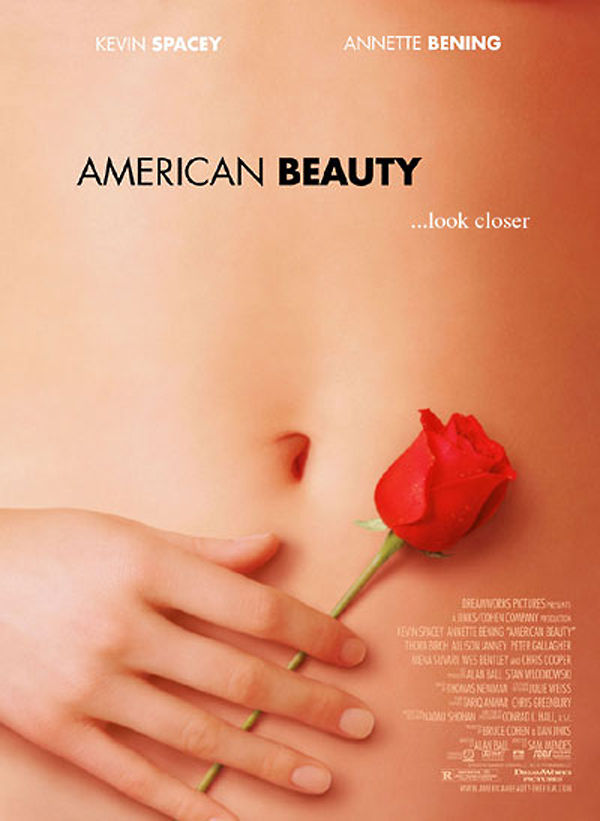 American Beauty wins this by a few inches. An exceptionally well made film, featuring some of the best performances, score, writing, and direction in recent cinema. Minghella’s The Talented Mr. Ripley is so unsettling which might explain the lack of love at certain ceremonies. But this is a near flawless film and terrific adaptation of the novel. Fight Club is a film that exists on so many levels – from the ostensibly hedonistic to the psychological and back. Sleepy Hollow and Election round out the top 5. Both genre films, both ignored by the major awards. The End of the Affair and The Insider come next. Both are good films that have been maligned to some degree by audiences, but both are worth your time. Being John Malkovich, The Sixth Sense and Toy Story II round out the top 10.
The Auteurs
The three-horse race consisted of Sam Mendes, Anthony Minghella and David Fincher. All three manned their films ending up with great results. I don’t believe in ties so I won’t lump them all together. So it would be Minghella, Mendes, Fincher. They’re all pretty close though. P. T. Anderson comes next for Magnolia. A good film I was not all for, but his direction was underrated in this one. Tim Burton did his second best live action feature with Sleepy Hollow. An unorthodox adaptation of the original, definitely. But the reinvention worked on film. This was easily one of the most visually appealing films of the 90s. Spike Jonze rounds out the top 5 for his work controlling Being John Malkovich. It would have been easy to lose control of this unconventional piece. But Jonze manages well, directing the cast members [especially Keener and Diaz] to greatness. The top ten includes Mann who went slightly low-key directing The Insider, M. Nyght Shyamalam for keeping the suspense palpable in The Sixth Sense and even managing to sell off the potentially dodgy ending. Alexander Payne’s work is highly effective in the underrated Election and although Neil Jordan’s work in The End of the Affair, it’s more forceful if you look closer. Animated films are often ignored when it comes to direction but I feel John Lasster deserves recognition.

The Leading Men
This was quite a year for the leading men. I had a tough time narrowing it down to ten even…and the male categories are usually the weak ones. So let’s take a look.
 Kevin Spacey was the clear winner for me. His exceptionally smooth portrayal of the role was spot on. You could not NOT be enthralled by his performance. He was followed by Matt Damon in a startling and off putting characterisation as the eponymous Ripley. This is the best thing that he has ever done. Those last few minutes of the film are extremely poignant and chilling at the same all because of him. Ed Norton rounds out the Trinity with his deliciously macabre performance in Fight Club. Completely overlooked, I was fascinated with his performance. Ralph Fiennes [The End of the Affair] and Johnny Depp [Sleepy Hollow] were both good and underrated that year, although their performances never picked up. Rounding out my top ten were Russel Crow [The Insider], Haley Joel Osment [The Sixth Sense], Matthew Broderick [Election], Ryan Phillipe [Cruel Intentions] and Denzel Washington [The Hurricane]. Each of these gentlemen truly commanded the attention of the audience although some were brasher about it than others.
 The Wonderful Women
 The women were unusually weak this year. Annette Bening stood head and shoulders above the rest in her mesmerising performance. Below her Hilary Swank and Julianne Moore in Boys Don’t Cry and The End of the Affair stand. Both give very capable performances finding the light in their somewhat troubled characters. Reese Witherspoon was a true delight in Election playing the character just right. And despite her meanness I was rooting for her all the way. But that’s just me. Janet McTeer comes next in Tumbleweeds. A flawed film but a fine performance nevertheless. Meryl Streep is a runner up for her able but unexceptional work in Music of the Heart. Julia Roberts is also a runner up for Notting Hill. She can do this role in her sleep. But she’s still pleasant.
Featured Men
 Jude Law steals the show – by a mile. Despite leaving the film around the half way mark the impression he makes is indelible. Dickie is a cad, but he’s a charming cad and despite his arrogance we like him, we want to be his friend. It’s easy to understand why everyone finds him so interesting. Brad Pitt comes in second playing a character that’s somewhat similar. His Tyler Durder is a nice slice of horror and comedy. His chemistry with Helena Bonham Carter is scorching and every line reading from him is as deliberate as necessary. Chris Cooper comes next for his flawed character in American Beauty. He freaked the hell out of me the first time I saw this. This was a way better performance than his Oscar winning performance in Adaptation. Philip Seymour Hoffman in The Talented Mr. Ripley and Wes Bentley in American Beauty round out the top 5. Both men are rarely thought of…but they were perfect in their portrayals. Runners up include Michael Caine in The Cider House Rules, Michael Clarke Duncan in The Green Room, Tom Cruise in Magnolia and Chris Klein in Election.
Featured Women
 Helena Bonham Carter couldn’t even get a nomination for her performance in Fight Club. But she has my vote. Dirty, smart, sexy, repulsive, trashy, intelligent – it’s all their in her performance. Who the hell is Marla Singer? That’s a good question. But whoever she is Helena nails it. Angelina barely misses the crown for her wonderful turn in Girl, Interrupted. Although some are not fans – I was hooked. Lisa does it all, and more. After that it gets tougher because no one else is as obviously outstanding…but they’re good. So I’ll go with Cate Blanchett. Yes her role is short, and I do mean short, but I just want to give Meredith a hug. Okay, maybe more than a hug, but she’s the only truly likeable character in the movie. Julianne is all sorts of brilliant in Magnolia and then there are the ladies from Being John Malkovich. Catherine and Cameron are both awesome and cringe worthy at the same time. Not only for the acting – the movie itself. Toni Collette [The Sixth Sense] was a millimetre away from making the cut. She really does well in this film. Gwyneth Palthrow and Chloe Seveigny are also soft yet strong women in The Talented Mr. Ripley and Boys Don't Cry. Lisa Kudrow shows off her comic chops in Analyze This and goes toe to toe with DeNiro like nobody’s business. Thora Birch did well with her role in American Beauty. I would have liked to see a little more depth. But it is well done, all in all. And Miranda Richardson’s cameo in Sleepy Hollow stills makes my skin crawl.
The Scripts – Originals
Looking at this category effectively may probably require repeated viewings. But as it stands these piqued by imagination. American Beauty and Being John Malkovich, though so different, were both so similar in their originality. Both scripts were taut and fluid and featured realistic and interesting characters. Magnolia is a film I think I should see again, I haven’t seen it since 2001. But I do remember the goodness of its script. Analyze This was a favourite of mine with some insane dialogue. To some extent I felt The Sixth Sense screenplay was too in love with itself, but it had some really good moments.
The Scripts – Adaptations
The Talented Mr. Ripley deserved this award with so much fervour. One of those big mistakes on the part of The Academy. Election seems extra light, but it is deceptively so. As the climax of the film meets the screenplay gives us the shining moments. Fight Club may have gotten indulgent at times, but it never got too visceral. And even when it wasn’t 100% it was still gripping. The End of the Affair was unfairly treated. The screenplay did as much as it could not to be heavy handed and The Insider was a well written drama.
Music
This is going to be flawed since I haven’t seen many of these films in years…but in descending order here are the outstanding film scores as memory serves.
The Talented Mr. Ripley
The End of the Affair
American Beauty
The Insider
Sleepy Hollow
Set Design and Art Decoration
Sleepy Hollow
he Talented Mr. Ripley
The Cider House Rules
Anna & the King of Siam
The Mummy
Costumes
Sleepy Hollow
The Talented Mr. Ripley
Anna & the King of Siam
The End of the Affair
The Mummy Cinematography
The Talented Mr. Ripley
American Beauty
Being John Malkovich
Sleepy Hollow
The Matrix
Visual Effects
Sleepy Hollow
The Matrix
The Mummy
These were the films I saw in descending order American Beauty [A], The Talented Mr. Ripley [A], Fight Club [A], Sleepy Hollow [A-], Election [B+], The End of the Affair [B+], The Insider [B+], Being John Malkovich [B], The Sixth Sense [B], Toy Story II [B], Magnolia [B], The Matrix [B-], Analyze This [B-], The Cider House Rules [B-], Notting Hill [B-], Cruel Intentions [B-], Tarzan [B-], South Park: Bigger, Longer & Uncut [B-], Girl, Interrupted [B-], The Hurricane [B-], Tumbleweeds [B-], The Virgin Suicides [B-], The Story of Us [C+], She’s All That [C+], The Mummy [C+], The Best Man [C+], Boys Don’t Cry [C+], Austin Powers: The Spy Who Shagged Me [C+], Anna & the King [C], Runaway Bride [C], Eyes Wide Shut [C], American Pie [C], Entrapment [C], Music of the Heart [C], The Wood [C-], 10 Things I Hate About You [C-], Jawbreaker [C-], Double Jeopardy [D+], The World Is Not Enough [D+], Dogma [D], Teaching Miss Tingle [D-], Message In A Bottle [D-], Big Daddy [D-], Deuce Bigalow: Male Gigolo [D-], Wild Wild West [D-]
But dear reader. What were your thoughts on 1999? Which of these films have I underrated? Overrated?
Tuesday, 18 August 2009
The Talented Mr. Ripley was one of the best films of 1999. Written and directed by Anthony Minghella [of The English Patient fame] it stars Matt Damon, Gwyneth Palthrow and Jude Law. Despite seeing this movie until five years after its release I believe that Jude deserved the Oscar for this performance. It’s sad though, that despite being a great film it has shifted out of the consciousness of the average film lover. It’s probably because of the lack of popularity of the film that makes this character appropriate for this series.
We first meet Meredith early in the film as Tom Ripley is at the airport embarking on his quest to find Dickie. She seems like a nice girl, if a tad bit talkative. We like her, but after her few minutes of screen time she fades out of the film and we forget about her. It’s very much later, the film has taken a turn for the more macabre when Tom/Dickie meets her again. She’s not quite the girl we saw at the beginning. She’s still as affable, but seems a little more mature. She’s nothing like Marge. This isn’t a repressed and mysterious American. Meredith lays all her cards on the table an American heiress but without a false bone in her body.
 This performance is often regarded as against type for Cate. Of course just won year earlier she had won her first Oscar nomination for the frigid Elizabeth. Despite her little screen time Cate’s Meredith is an essential character. As a member of the audience we may be at a loss to just how Tom is able to carry on his charade. But if Meredith, who despite her joviality is not a simpleton, is duped he must have some sort of innate charm that we may not be seeing.
My favourite part of the film with Cate occurs after Tom/Dickie has confessed that Marge will always be the one he loves. Her promises to meet her the next morning to day goodbye. Whilst waiting Meredith comes across Marge and a friend. As she speaks to them we can understand her feelings of despair. She really did like Tom/Dickie; and as she bids Marge goodbye with a smile we don’t find her fake. We almost wish that she could have her happy ending… almost. We last see Meredith late in the film, after Tim/Dickie has made his escape. He and she share a long kiss and then she’s gone. I don’t think this role is as easy as we tend to think , and in a way Meredith represents the only truly good and happy character in The Talented Mr. Ripley.
Previous Entry
Miranda Richardson in The Hours
VOTE KATHARINE HEPBURN AWARDS
Cate Blanchett in The Talented Mr. Ripley As Meredith Logue
We first meet Meredith early in the film as Tom Ripley is at the airport embarking on his quest to find Dickie. She seems like a nice girl, if a tad bit talkative. We like her, but after her few minutes of screen time she fades out of the film and we forget about her. It’s very much later, the film has taken a turn for the more macabre when Tom/Dickie meets her again. She’s not quite the girl we saw at the beginning. She’s still as affable, but seems a little more mature. She’s nothing like Marge. This isn’t a repressed and mysterious American. Meredith lays all her cards on the table an American heiress but without a false bone in her body.
 This performance is often regarded as against type for Cate. Of course just won year earlier she had won her first Oscar nomination for the frigid Elizabeth. Despite her little screen time Cate’s Meredith is an essential character. As a member of the audience we may be at a loss to just how Tom is able to carry on his charade. But if Meredith, who despite her joviality is not a simpleton, is duped he must have some sort of innate charm that we may not be seeing.
My favourite part of the film with Cate occurs after Tom/Dickie has confessed that Marge will always be the one he loves. Her promises to meet her the next morning to day goodbye. Whilst waiting Meredith comes across Marge and a friend. As she speaks to them we can understand her feelings of despair. She really did like Tom/Dickie; and as she bids Marge goodbye with a smile we don’t find her fake. We almost wish that she could have her happy ending… almost. We last see Meredith late in the film, after Tim/Dickie has made his escape. He and she share a long kiss and then she’s gone. I don’t think this role is as easy as we tend to think , and in a way Meredith represents the only truly good and happy character in The Talented Mr. Ripley.
Previous Entry
Miranda Richardson in The Hours
VOTE KATHARINE HEPBURN AWARDS
Subscribe to:
Posts (Atom)