|
|
|---|


Monday, 31 January 2011


 It’s difficult to distinguish Jacki Weaver from the woman she plays, her big eyes constantly watchful of everything around is a key part of her role in this quasi-family quasi-crime drama. As the most important female of the lot, Jeanine prevents the narrative from being bogged down by all the testosterone present and though I think it’s the slightest bit insincere to consider her as the mastermind behind the family – her role is key. I still cannot succumb to hatred of her, for in her devious ways she’s protecting her family the only way she knows how – at whatever cost.


Sunday, 30 January 2011

 Bale avoids the most obvious of pitfalls and avoids turning Dickie into one of those usual walking powder-keg drug addicts. Sure, he gets the physicality of a user down excellently – with every bodily twitch, but the performance has much more to offer. As riveting as he is in those moments, it’s the emotional bits where he shines. As good as he is with Mark his best moments are opposite Melissa Leo (a dynamic I’d have loved to see more of) and despite his overt lack of restraint his devotion to his family rings throughout the drama. (Highlight: “I Started A Joke”)
 I hate that his obvious “actor” scenes are the ones that people keep remembering because the reasons I like this performance so much comes to the smaller bits. He knows Mark is an asshole, but he also knows they’re both similar in that desire for kinship (even though Mark is adamantly against social contact). He responds to every action from Mark, but he doesn’t really respond to Mark – and I’m not sure if its Fincher’s direction or his sensibilities but with every wince (blink and you’ll miss them) or slight intake of breath he’s making Eduardo more than the just token wronged friend and into a real person, which sounds sort of clichéd but is true nonetheless. (Highlight: The Chicken incident, at the deposition and at Harvard)
 I think I tweeted sometime towards the end of last year that Paul is probably the most sympathetic character in the narrative. They’re all moving in their way, but this bathetic man child becomes the most stirring because Ruffalo is doing so much with it. It’s not that he gives my favourite performance of the film (he doesn’t) but it’s a classic example of script and actor finding a perfect match. He doesn’t even seem aware of Paul’s insecurities because Paul isn’t even aware of his insecurities, and those lingering glances and bits of stilted conversation only underscore the sort of wandering soul he is. And he does it all without EVER going over-the-top with it. (Highlight: First Meeting with Moms)
 Rush avoids his usual theatricality (which I’m actually fond of) for a surprisingly tender portrayal of Logue here. Even though a significant portion of the narrative examines his relationship with the King, Seidler doesn’t explain his arc fully which leaves Logue as something of an enigma at times and Rush has no problem doing that. Sometimes it seems as if he’s usual tricks but that soft empathy with which he approaches Bertie is significant allowing him to dig deeper. One of the lasting things about the film is that you get the feeling there’s more to the man – but neither he (nor the film) is interested in going there. He’s willing to step aside.
 He has the sort of “open” face that makes it distressing to watch him, especially when you take into consideration how much he underplays the addiction arc – saving all that pent-up desperation only to completely destroy you when he unhinges in that final scene – well more than he was before. He’s already unhinged, not in the same manner as Mendehlson’s Pope, but just as much. His entire final scene played on a loop after coming out of the movie and it’s startling how with the absence of dialogue and even without the very overt facial tics that you’d expect, he manages to convey that nadir of despair that’s responsible for thrusting the narrative in a new destroy. (Highlight: his death)
Saturday, 29 January 2011
Due to my own negligence I missed 30 Rock this week. Apologies.

Cougar Town: “Lost Children”

Community: “Celebrity Pharmacology”

The Office: “The Seminar”

Parks & Recreation: “Flu Season”

Standout Writing
Cougar Town A
Parks & Recreation B+
Standout Acting
Amy Poehler in Parks & Recreation B+/A-
Christa Miller in Cougar Town B+/A-
Jeanne Tripplehorn in Big Love B+/A-
Bill Paxton in Big Love B+/A-
Rashida Jones in Parks & Recreation B+
Rob Lowe in Parks & Recreation B+
Ginnifer Goodwin in Big Love B/B+
Friday, 28 January 2011


 Her supporting turn in Shutter Island is a bit of a blink and you’ll miss it one – and yet, along with Williams and DiCaprio, she leaves the biggest impact on you. You rarely ever seeing Patty being loud and obnoxious, always opting for a quiet sincerity which is her ace-in-hole when it comes to Cairo Time which she makes so much more important than you expect her to be. And then opposite Tucci she offers up one of the best screen-mothers of the year in Easy A. Truly, a great body of work.
 I don’t know – the fact that each film has landed with almost no sound makes me rethink the sentiment – but, perhaps, Kerry is on her way to stardom, opting for the slower path. She pulls out three performances that rests on internalising grief and pain and performs each brilliant. Sure, she thrives best in Mother & Child, but even in the huge cast of For Colored Girls with the storyline that seems least important she carves something special. (And story issues aside she and Mackie are beautiful to watch in Night Catches Us.)
 * Just in case you're wondering, Johnny Depp would win the alternative award here. He's easily the worst thing in The Tourist and Alice in Wonderland (yep, even worse than the Wasikowska's bland work in the latter.) He sinks Angelina's attempts to be at least interesting in the former, and other than a glimmer of goodness opposite HBC he's terribly vile in the latter. I hope it's not the beginning of a trend for him...

 I can't help but think of Countess de Mertieul when I think of great endings because Frears decision in Dangerous Liaisons is impeccable. What makes this anecdote more interesting is that my favourite ending from last year was ALSO in a Frears flick, and had to do with a face in the mirror too. Yup, Pfeiffer's chilling look into the mirror in Chéri sticks with me until the end. This year the endings have nothing to do with Frears, period pieces or aging women - but they're still brilliant. And even though films don't demand a great ending, sometimes they can turn a middling film into an excellent one with just a few minutes. Let's take a look at 2010.
 I’ll admit, Agora is on the nose and Amenbar exploits the (alleged) brilliance of Hypatia – but all that’s important so that her death has that effect on you it must. Max Minghella’s talent is still in development through Agora but he’s best opposite Wiesz and the two manage to sell that moment where he strangles her to save her from being stoned alive. True, in reality her death was more harsh and less romanticised, but it’s a nice moment of humanity and sure that final cut to the earth from a far is a little extraneous, Amenbar has made his point.
 I’m hoping, against hope, that James Frecheville has a long career ahead of him. He plays J with just the right amount of detachment and that moment where he turns his gun on Pope is both surprising but logical. And that final shot of him hugging Weaver is beautiful. I still can’t agree that her Grandma Smurf is a relentless villain – she’s just especially devoted to her children, and it’s important that our final shot of her is one of her at her weakest.
  That entire final sequence of The Ghost Writer as we finally realise that Williams’ suave wife was behind everything is brilliantly played out, but that final moment as our ghost gets knocked down (off-screen) still takes the cake as the most surprising, riveting, exasperating and brilliant closing of the year. You can just imagine Polanski grinning at the audience there, and as vexing as it is its excellence is indisputable.
 There is something obvious and glib even about having Mark spending his life hung up on a one girl, but I like this closing nonetheless. A) because it begins with Rashida Jones being all amazing as is her wont and because Eisenberg sells the confusion of Mark, and the irony – as obvious as it is – that he’s there waiting for a friend request to be accepted is just too good to ignore.
Thursday, 27 January 2011

(Click on photos for reviews.)
 In actuality I can’t say that in terms of necessity the opening really establishes anything, but it’s still gorgeous to watch. Perhaps, if I think closely the same preposterous sort of extraneousness that pervades the film begins here with this arresting but strange number. It works well in the context that turns Nina into a bit of a soothsayer, because she knows she’s going to be destroyed even before she really does know. It’s that sort of bizarreness that defines the film, throughout.
 Functionality aside, it’s the most beautiful opening of the year – it uses its dialogue as effectively as The Social Network, the cuts to the dancing are as beautiful as in Black Swan and the use of music is as striking as in The Deathly Hallows. But, it’s not just extraneous beauty – it’s making a point, too; it’s probably the sole portion where the stage conceits translate brilliantly to film. Yes, the film does dip in quality afterwards, but that doesn’t make it any less lovely.
  The film never reaches the quiet profundity of the opening again, which is a shame because that opening really is lovely. It’s one of the few times where creative team actually decides to do something original instead of adapting the book meticulously (to a fault). The score, the cinematography, and just the tired looks of the characters – it all just works, and in just a few short takes establishes the current situation.
Wednesday, 26 January 2011
And my recap of the official “Oscar” categories begins. I really can’t overstress the dissonance I feel about the crop of films we’ve been offered up this year. I don’t know if I’m getting too jaded for my own good, but it’s becoming increasingly difficult to surrender to the worlds of film generally and though this year’s supply is not terrible it’s a situation of too many “goods” and too few greats.
But, I’ll save all that rambling for later categories.
I was musing on a format, and instead of sticking with the more aesthetically pleasing (and altogether easier to digest) table format I’m sticking with general paragraphs, because even if I’m not in love with many films this year I find that I’ve managed to get even more voluble Be warned, excess verbosity ahead. (Click on the photos for reviews, where available.)
SOUND EDITING
In short, this recognises the artificial creation of sounds that are inserted into the film.
THE NOMINEES
127 Hours (Hugh Adams, Ben Barker, Nicholas Becker, Glenn Freemantle)  If I was petty (no, your comments aren’t necessary for that particular anecdote) I’d ignore it here because the film is making leaps and bounds just to ensure that the sound design is as obvious as ever. But that would be silly, a) because it’s dumb to ignore good work even if it’s in an obvious manner and b) I don’t think the sound team would especially snubbed by an exclusion from me. So, I won’t cut off my hand to spite my arm – and snub it here. (That was a bit distasteful no?)
Inception (Paul Berolzheimer, Richard King, Michael Mitchell)
It’s a bit like 127 Hours in the sense that it’s difficult to ignore, but there that obviousness of the sound design is an absolute necessity which they use for their benefit. Any dream world depends on the smallest of things and the sounds become amplified to the point that they’re just as important as the things we see.
Robin Hood (Wylie Stateman, Mark P. Stoekinger)
The sound-work in Robin Hood, in its way, is a sort of representation of the good and bad in the film. Like Scott’s entire vision of subverting the usual swashbuckling Robin of Loxley, the sound is defined by the simplest of things. Yes, there are the obvious horse hoofs and whatnots, but even the silence is a sound effect in itself – as faulty as the film is at times, it’s one of the most unfortunate snubs in the technical department.

It works as well as it should in the more obvious video-esque scenes because that is – on the surface – the film’s key aspect, but smaller things like the reverberating sounds in Scott’s alter universe or that first party make good use of sound. You’d expect them to be a whole lot less subtle with it, but it’s all quite smoothly handled.

From the heavy breathing, to the raging storm it all contributes to the very unsettling tone pervading the island the film. Visually we get the sense that something’s off, the effect of the sound, though, make it positively distressing.
FINALISTS: Agora doesn’t thrive as much on its sound editing as its mixing because unlike most sword and sandal epics it’s not that external – but it’s still a worthy contender; Green Zone, too, doesn’t use as many effects as you’d expect, but this is one of those entries that you’ve have expected to translate to Oscar love; and kudos to How to Train Your Dragon for neither exploiting the animation and giving us a talking dragon, and for realising that are interesting effects much more striking than dialogue.
SEMI-FINALISTS: Black Swan; Harry Potter & the Deathly Hallows
SOUND MIXING
The coalescing of all the sounds - music, dialogue, effects.
THE NOMINEES

Because that centrepiece of the library being destroyed functions as a climax for the entire film I can’t help but zero in on that specifically – but with all those wild mob scenes (enhanced in the second half) the sound mixing becomes a key aspect in showing just how much Alexandria has changed.
Black Swan (Ken Ishii)

Even if the screenplay is lacking on occasion Aronofsky is well aware of what to do to amplify the terror that’s necessary not through words, or dialogues (or even those usual thriller-film tricks). When the visuals become saturated, the sound emerges as even more pivotal in representing Nina’s delirium.
The Ghost Writer (Jean-Marie Blondel, Katia Boutin)
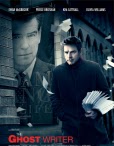
True, I’m sort of in love with Desplat’s score so there’s that possibility of nepotism when I take note of the way that Desplat’s score blends beautifully into things like the rustling of the waves. But, those very blends are pivotal in evoking that ultimate sense of faux-dread mirroring Polanski’s tone that’s never sincerity in trepidation but always spilling over into something jokingly sinister.
Green Zone (Jorge Adrados, John Hayes, Simon Hayes, Markus Moll)

It’s an ideal candidate for its sound work – after all, this is the same admirable sound team of the Bourne Trilogy. The blending of the sounds is excellently done, and it’s a shame that it’s being ignored because everyone forgot that there was another Iraq film coming after The Hurt Locker. Madness.
Like the work in The Ghost Writer the blend between score and effects is excellent – it fits the thriller-ish nature of the film too knowing just when to step back and wait for the right moment to jump the audience
FINALISTS: Sometimes in 127 Hours you get the feeling that the mixing’s just a little disingenuous and what should be smooth flowing ends up as a little jarring – just for the hell of it, it’s still outstanding work but still...; I’m a bit sorry that I couldn’t get a spot for How to Train Your Dragon if only because those last fifteen are kind of awesome; and then there’s Let Me In which has a climatic that depends more on the sound than the visual (oddly) and to brilliant results
SEMI-FINALISTS: Inception; The King’s Speech; Robin Hood; Salt
ORIGINAL SCORE
NOMINEES
Dario Marienelli Agora
It’s not as in keeping with its period as much as his work in Pride & Prejudice, but it’s another aspect of the film making this old story futuristic. And it’s never too much – he knows the wisdom in less being more.
Alexandre Desplat for The Ghost Writer
More than any other technical aspect Desplat realises just what Polanski is going for and his score becomes a key to understanding what we’re supposed to take away from the film (case in point: the beach scene).

I’m actually surprised that despite its effusiveness Desplat manages to never turn this into something overbearing. You wouldn’t think that Bertie’s story demands music but Desplat’s work is flawless.

It seems as if the score is almost the part of Becca that she’s unable to convey to us with words. That entire scene where she washes Danny’s clothes is buttressed by the music which is ostensibly soothing but still very much on edge.
Trent Reznor and Atticus Ross for The Social Network

Over appreciation for The Social Network aside resulting in this getting recognition, in the grander scheme of things I don’t mind because the score IS that worthy of appreciation. Sure, the opening scene is Sorkin’s dialogue but the film truly begins as Mark travels back to his dorm room and from then – to the end – the music just merges beautifully with the narrative. Always striking, and yet always subtle.
FINALIST: Michael Giacchino for Let Me In
SEMI-FINALISTS: Rachel Portman for Never Let Me Go; Kjartan Sveinsson Ondine; Carter Burwell for True Grit; Murray Gold for Veronika Decides to Die
ORIGINAL SONG
THE NOMINEES
“Bound to You” from Burlesque (Christina Aguilera, Samuel Dixon, Kate Sia)

It’s easy to ignore it as a run-of-the-mill love song, but the union of music and lyrics is beautiful and though it loses points for being wasted because Ankin seems unsure of the precise moment to get romantic – it’s still the most laudable effort of the show.
“Welcome to Burlesque” from Burlesque (Matthew Gerard, Steve Lindsey, Charlie Midnight, John Shanley)
I’m surprised that this one in particular never took off – it sort of the essence of what they’re demanding in the song category. Okay, so maybe Burlesque isn’t as mysterious as Cher tells us but it functions excellently as the first real number of the film.

Leave it to Chris Martin to create a country song that evokes the nostalgia necessary for country music and yet is nowhere near as standard as you’d expect. The music invites you in and then the lyrics send you on another spin. It’s all very sedate, but that makes it all the more moving.
“Mother Knows Best” from Tangled (Alan Irwin, Alan Menken, Glenn Evan Slater)

More than any song from the film (heck, any song this year) Menken shows here why the music is just as important as the lyrics. He matches the very ambiguous lyrics with an even more discordant melody that has you tapping your feet AND feeling unsettled.
“Garbage Truck” from Scott Pilgrim vs the World (Beck Hensen)
All the music here is completely in touch with the quirkiness of the film and this one works better than all, not only because its’ the nicest one to listen to (though, perhaps, that’s debatable) but there’s something hilarious about it and it wins points for fitting the best in the action around it.
FINALISTS: “I See the Light” from Tangled sure does sound pretty for the most part, but it’s exasperating how Menken dilutes his usual cleverness. Sometimes the lyrics are just too tepid and then there’s the whole fact that the entire chorus seems to defy logic; it reminds me a bit of “But I Am A Good Girl” from Burlesque which is as nice to listen to, but loses a whole lot of its oomph when you really think it over. We get it Christina, you’re being coy because you’re not really a good girl.
SEMI-FINALISTS: “Coming Home” from Country Strong is sooooo on the nose, and it’s weird that this is the one that’s remembered being “Me & Tennessee” already does everything’s it’s trying to do – but better. It’s still charming in its way, though and I was hoping for a win for “You Haven’t Seen the Last of Me” from Burlesque even if it was altogether too precise in its machinations. Cher raises its profundity, but faults and all there’s something appealing about it nonetheless – and come on, who can’t relate?
I’m actually really interested in what you thought of sound this last year in cinema, because most persons rarely cite their favourites even though sound – above all else – could be considered as the single thing that differentiates movies today from those 100 years ago. What achievements in sound do you remember fondly? And what of the music? Even though they exasperate me to no end I’m still hopelessly (hopefully?) in love with the music category at the AMPAS.