|
|
|---|


Monday, 21 February 2011

It’s so hard choosing “best” scenes, or even “favourite” scenes. There are some films that are great, but unfold so organically it’s difficult to cite a single scene as “best”. Last year, I noted that my favourite scene of the year came from An Education, which happened to be my favourite film of the year (COMPLETE LIST). Even though I’d say last year had more to offer in overall film quality, this year seemed to have the more obvious showings of good scenes. So, my top ten goes like this (the 15 finalists HERE)
(click on the photos for reviews)
THE NOMINEES
Agora (Destroying the Library)
 There are those rare moments where Amenabar seems to lose sight of his general objectivity, but at the height of its success Agora really is an objective attempt at the historical epic. The destruction of the library emerges as the centrepiece for the film in more ways than one. On the technical aspect, the scope of it is peerless. The production design, visual effects and cinematography are all essential in establishing that pandemonium as Hypatia and her lot make their attempts to salvage the “important” works. Then, there are the smaller thematic arcs – like the parting of ways between Davus and Hypatia. It’s the solitary moment where Weisz’s Hypatia is not calm, elucidating just how much she feels for knowledge. It’s a perfect coalescing of technical and emotional aspects and easily Amenabar’s strongest portion of Agora.
 The Kids Are All Right (familial dinner So Blue)
 One of my sisters said, of this scene, that it’s so good because each of the five actors is doing some of their best acting – and it’s true. It’s Annette’s scene, yes, but it’s not hers alone. From the onset of Nic’s attempts to be chummy with Paul, you already get the feeling that he’s a bit uncertain of himself and Huthcerson and Wasikowska’s facial responses to the opening of “Blue” is perfectly played. And, then, there’s Julianne – so guilty, and so vulnerable. The thing, it’s not just the acting (and writing) though – editor Jeffrey Werner and Cholodenko know just when to cut the shots and it all leads into Nic’s discovery of the hair. Everything works just brilliantly.
 Let Me In (Killing The Police)
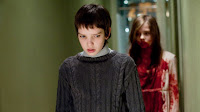 From the moment that Elias Coteas’s policeman raps on the door in Let Me In, with Owen inside you know that things are going to go awry. Reeves is a master of atmosphere, which is his most significant calling card in making the tension so palpable in Let Me In and the entire ensuing scene works because of the richness of the atmosphere. That doesn’t lessen the profundity of Kodi-Smit McPhee’s work, though. It’s his strongest scenes, and although it’s mostly a reactionary one he’s excellent. He has the difficult task of portraying that sort of bathos you’d expect from a child in this situation, and his aghast response to the Police’s death is one of genuine fear and sadness, and it’s all aided by Giacchino’s fine score.
Scott Pilgrim vs the World (the battle)
 Is it possible to resist the epic brilliance of that final battle in Scott Pilgrim vs the World? It’s the climax of the film, the one those videogame geeks (the film’s ostensible target audience) would have been waiting for, that scene that’s unashamedly indicative of its roots and you sort of get the feeling that Wright, too, can’t wait for this moment to toss out all his tricks. And, usually, you’d think that tricks don’t necessitate goodness, but it’s all part of the atypical way of Scott Pilgrim vs the World – the tricks are an essential part of it. Watching how Scott approaches the single situation (before and after) and seeing how his approaches lead to the domino effect of reactions from the characters is fine example of Wright ensuring that his moral themes hit home without being maudlin. Perfect.
Shutter Island (revelation)
 I still maintain that Shutter Island would have been a much better film (albeit an unsatisfactory adaptation of the novel) if it ended here. Even if you’re not aware of what is going to happen, you know that the film is building up to a specific moment – this being it, and everything good about Scorsese and DiCaprio (as far as Shutter Island is concerned) occurs here. The atmosphere is potent, but not overwrought and Michelle Williams so just excellent opposite DiCaprio here. It’s a true credit to DiCaprio that he manages to make this moment play out without undermining the necessary emotional connection.
FINALISTS
The Kids Are All Right (Meeting Paul)
 Then there’s our first meeting with that “awesome sperm donor”. Me and my mind can’t help going to dirty places when they start in on their tongue story (but they’re begging for it) and like everything in The Kids Are All Right we’re being prepared for every major plot point. Joni and her latent resentment of Nick, Paul and Jules potential bonding the vague discomfort of everyone – especially Paul. It’s one of the reasons I singled this out as the best ensemble, they’re always playing off each other – and so excellently, too.
The Social Network ("Lawyer up, asshole!")
 Because The Social Network is so inextricably linked with the personality of its protagonist – ostensibly cold, vaguely mysterious, sometimes confusing – it’s essential that Garfield’s Eduardo is there to offer a semblance of balance. That’s why, despite the fact that Eisenberg is the film’s best actor, the film’s strongest scene (in my eyes) depends on Garfield just as much – more, perhaps. The way that The Social Network is written ensures that it’s all building up to that scene where Eduardo and Mark part ways, and you can’t fault Sorkin for pithy dialogue – it’s required here. There’s something great about that “lawyer up, asshole” line that’s all sorts of awesome.
SEMI-FINALISTS
Animal Kingdom (Craig's Death)
 It’s not that Animal Kingdom is lacking in a wealth of strong scenes featuring the entire ensemble (both meetings in the café, for example) but when I think of the strongest moments in the film I can’t help but return to a moment that should play as just the slightest bit superfluous, but never fails to rouse my attention – Craig’s death. It’s possible that it’s because Stapleton gives my favourite performance of the film that makes me even more appreciative of this scene, but everything leading up to it – Craig’s argument with his friend, his growing paranoia and then the threatening advance of the police is proof not only of Stapleton’s performance but Michôd’s fine direction.
 The Fighter (Charlene's Fight)
 I find it hilarious that my favourite fight scene in The Fighter has little to do – directly – with Micky’s boxing career: Charlene vs the Seven Sisters from hell. The scene really begins at Alice’s home as she and her daughters prepare to wreak havoc on Charlene for derailing their plans with Micky. From the moment they get into that beat-up car you know that what’s imminent will be marked by that deliberate dry humour looming over some of the strongest moments of the film. Amy, so very fearless here, is brilliant as her Charlene clashes with the sisters. Russell is so smart, though, and he knows that the scene holds more importance than just the hilarity to be gotten from the hillbilly antics.
Rabbit Hole (Bowling Alley Birthday)
 Even though Nicole, easily, gets best-in-show citations in Rabbit Hole, I still like to think of its ensemble as the heart of the drama – which makes that bowling-alley birthday of Izzie such a perfect scene to encapsulate all that I love about the movie. Teller and Oh (both good) don’t show up here, it’s all about the actual family. Blanchard, forever on the sidelines with her subtleties, is so good when she reacts to the gifts and Becca watching Izzie respond is a good example of Nicole being completely in tune with her character’s inclinations. I love that blink-and-you’ll-miss-it bit of conversation that Howie and Nat have (I wonder what their relationship is like) and of course that final blow-up between mother and daughter. Wiest and Kidman are so wonderful opposite each other.
Do any of these scenes strike you as a perfect symbol of the goodness (or lack thereof) of cinema in 2010


Sunday, 20 February 2011
When one remembers On the Waterfront, in relation to “great” scenes, we’re immediate moved to reminisce on that backseat conversation between Brando and Steiger which is excellent. But, I always feel badly that the male ensemble always seems to render Eva Marie Saint’s Edie forgettable. The supporting actress category is no stranger to debut, and even though Eva Marie Saint’s inexperience is palpable at times I love her performance here – this scene (well, it’s sort of a two-in-one) is a fine example.


Terry (OS): “Edie! Edie!”

Edie: “Stay away from me!”


Terry (OS): “Edie!”


Isn’t it nice that directors actually made use of wide shots back in the day? It seems like almost every scene nowadays – confrontational or otherwise, is done using close-ups.
Terry (OS): “Come on, Edie! Open the door!”
Edie: “Stop it!”
And, he barges in...


Edie: “I want you to stay away from me.”Maybe it’s that line, but I always think of this part of the scene in conjunction with that other movie with a similar lover’s quarrel then reunion (this time Natalie Wood and Richard Beymer).


Terry: “I know what you want me to do, but I ain’t gonna do it, so forget it!”Brando covers a lot of ground in this movie, and it’s my performance of his – but gun to my head, I’d probably choose this scene as an encapsulation of why like him here.

Edie: “I don’t want you to do anything.”
And, you wouldn’t think it’d be a fair argument – but Eva is so fearless even in her delicateness...

Edie: “You let your conscience tell you what to do!”
Don’t you just love how that significant line is juxtaposed with the image of the cross which seems to sort of pop out from nowhere? Not overt, but still striking.

Terry: “Shut up about that conscience! That’s all I been hearing!”
(Doesn’t he look the slightest bit like a young Justin Chambers there?)

Edie: “I never mentioned the word before. You stay away from me!”


Terry: “Edie, you love me! I want you-”
I just love how this scene is shot, though; I’m a big Kazan fan so that’s not surprise.

Edie: “I didn’t say I didn’t love you, I said stay away from me!”

Terry: “I want you to say it!”

Edie: “Stay away from me!”


Edie: “Terry...”


Voice (OS): “Hey, Terry!”

Love that expression on her face, above.
Voice (OS): “Hey, Terry! Your brother’s down here and he wants to see ya.”

Terry: “Charley...?”


Voice (OS): “Hey, Terry! Your brother’s down here!”
And, another great shot above. I love that you can only barely make out Terry’s silhouette, and Edie’s stance there is so telling.

Voice (OS): “Come on down, he wants to see ya.”

So much subtleties there, Terry seems like he’s locked in a jail, and clothes on a line have never seemed so foreboding.

Voice(OS): “Come on down.”

Edie: “What is it?”
Terry: “Charley. I think he’s in trouble.”

Edie: “Be careful!”
The use of the wide-shot is almost foreshadowing in its use, and Kazan is always so smart about these things. This entire scene is marked by the tension, and it’s as if even when they’re alone Edie and Terry are still in danger – as if someone’s watching.


Terry: “Charley.”

Edie: “Terry?”

Voice (OS): “Your brother’s down here!”

Woman: “You hear what I hear?”(I always wonder how much this woman was paid, I think it's Anne Hegeira. My mind always goes to the weirdest things.


Edie: “Terry!”And, down Edie comes...

Edie: “Terry!”


Woman: “That’s the same way they called Andy the night I lost him.”(Talk about unnecessary warnings, eh?)

Woman (OS): “Edie, be careful!”

In another situation that light on Edie would be almost heavenly.


Well, of course you can’t actually hear it – but that’s the sound of a vehicle that makes Terry turn around which segues into Edie...

Edie: “Terry!”


Terry: “Edie, watch out for that truck!”


My favourite shot of the scene above: FYI.


The absence of dialogue as Terry looks out only makes the impending discovery more striking.

As the vehicle moves we see...

...a figure hanging on the wall...

And, now Brando looks like Beatty with that expression on his face.


Now, that’s a good use of close-up – unsettling, there’s something insulting about hanging a corpse like that.


I’m so impressed with Eva here because it’s easy for her presence to seem superfluous, but Kazan isn’t interested in focusing on Terry. She’s there for a reason, and Saint has the difficult task of showing emotion to the death of a man she knows little of. She doesn’t mitigate her fear, her confusion or even the numbness – she’s been through this before.


It’s an emotional scene, but Kazan never exploits it


That expression there is just perfect in its nakedness. One can only imagine what’s running through Edie’s head.

Edie: “Terry...”

Terry: “They got Charley.”

Edie: “Terry, I’m frightened. Let’s get out of here, please.”

Terry: “First Joey, and then Duggan and now Charley and then...Come on, who’s not flashing to “Somewhere” at that line?
Edie: Please Terry, someplace where we can live in peace.”

Terry: “I’m gonna take it out on their skulls.”

Terry: “Charley...”

Terry: “I’m gonna take it out on their skulls!”

Edie: “Please, Terry. They’ll kill you too!”

Terry: “Go, get the father. Tell him to take care of Charley...”

Terry: “...then come on back here and stay with him till he gets here.”
Edie: “Terry, please don’t do anything. Please!”


Terry: “For God’s sake! Don’t leave him alone here long”This is such a profound line. I don’t know what it is about Brando, he’s so deliberate but I never find him overly precise like other actors he’s often compared to (like DeNiro, for example).

Edie: “Please, Terry.”

Terry: “Do what I tell you.”

Edie: “Terry.”


There’s that light again, and it feels obtrusive somewhat. You’d expect light to be welcome at a time like this, but here it just feels garish.

God, I love Kazan (and Brando and On the Waterfront and Eva Marie Saint too). Sigh.
Too much priaisng of the wideshotS? This isn’t exactly the optimum scene for a Sunday rest, but what do you think of it (or Eva or Brando or On the Waterfront)?
Subscribe to:
Posts (Atom)