|
|
|---|


Monday, 4 July 2011
I envy those parts of the world that experience seasons. It’s hot all year-round here, except when it’s raining, so the concept of seasons is just that – a concept. It’s probably because it’s always so sunny that makes me feel less than joyful about things like “summer sun”. But, it’s summertime and time for some cinematic sun.
And, what better way to soak up the lethargy that the sun instigates than Sofia Coppola’s Somewhere which could probably take credit for the most misunderstood film of 2010? In retrospect I’ve got to give credence to Jose for including Elle Fanning on his year-end Supporting Actress list. She’s perfect opposite Dorff here. The film is so well casted that Sofia can step back and allow them to just exist, or luxuriate rather, in the atmosphere.


If I’m to think of what an ideal summer experience would be like it’d be this.


Saturday, 26 February 2011
When I think of my first impressions of some of these films, the results are kind of interesting. But, movie loving is a strange thing. Some of these films improve significantly on multiple viewings (The King's Speech, Scott Pilgrim vs the World) and some of them lose a bit of their lustre (The Social Network). The film I've seen most this year is The Kids Are All Right - and each time I see it, something new appears for me to love. Ah, le cinema....
(unless otherwise indicated, click on the photos for reviews)
 In its way Agora is just the sort of film that makes sense on my list of personal favourites. I’m as keenly aware of its issues as any of its detractors – well, except for Jose, even I can’t defend it from the tongue-lashing he gave it – but Amenabar’s pseudo-historical saga appeals to me not only on a social level but artistically. True, its technical achievements are impressive, and maybe there’s something in it being the first A (well, A-) that I gave this year. At its strongest moments, though, no other drama this year – not even The Social Network – is able to marry intelligence with entertainment so sumptuously. And, I’ll always credit it for making me appreciate the ellipse which I was never half as interested in when I was actually studying Technical Drawing.
  I’m anxiously waiting what Michôd’s next cinematic encounter entails. Perhaps, Animal Kingdom shouldn’t work as well as it does – and a throwaway description of it I heard (an Australian, small-scale GoodFellas) made me wonder if it’s all really as rote as that. Still, when it comes to being seamless in blending acting, direction and writing Michôd’s work here is astounding. It approaches the bleak issues with a freshness – that’s not delusion – and manages to suggest interesting things about potential archetypes with smart profundity.
 Detractors seem taken with the notion that the work is not laudable because the story is a normal suburban one with lesbians – no kidding. The very point of The Kids Are All Right IS the rote ways of suburban life, Paul is a mere plot point (albeit a nice, juicy one) and Choledenko knows to create the tone that makes the film dependant on its familial issues and not its LGBT themes. It’s a bit insular to boil it down to holding merit for the way that that ends up being so progressive; its strongest asset is its non-judgemental attitude toward its entire cast. It’s the sort of film that’s a bit like an arbitrary voyeuristic glimpse into the lives of a group of flawed individuals.
 When you get past the fact that The King’s Speech isn’t what you expect it to be, the tale that Hooper crafts is comforting in its stylish sedateness. The amalgamation of everything that makes it thoroughly British (even if in an ostensibly formulaic way) is stimulating to watch as Hooper and Seiberg use the conventionality to create something subtly imaginative. I don’t care if it’s technical aspects have (unfortunately) turned into something of a joke recently, but it’s the sort of subtle camerawork and editing that’s always impressive and what’s more it emerges as one of the most well paced cinematic experiences of the year.
 One of the strangest things about Rabbit Hole is how much we manage to learn in a mere hour and a half. Neither Lindsay-Abaire nor Mitchell is willing to waste time on the extraneous and they make each minute contribute to a consistent movement forward that’s deliberate (though, never forced) and organic always in its progress. I’d never call it overwrought because despite its emotive potential there’s a sort of sheen preventing it from being too interested in the hypersensitivity of dealing with death and more involved in the detachment Becca and Howie feel from the world. Mitchell echoes it in his directing, and Lindsay-Abaire ensures that it wraps up concisely – but not with an obtrusive ribbon to tie it off.
 No movie this year puts a perpetual smile on my face as much as Scott Pilgrim vs the World (yes, I’m in lesbians with it). It’s continually daring without any arrogance about it, and in its somewhat single-minded desire to entertain us it never robs its characters of their integrity. A videogame geek, I am not, but I feel affronted on its behalf for being relegated to mere “dabbling” in technological innovations. Wright’s dedication to story and characters triumphs over a number of the more non-comic films of the year, and he approaches his subjects with a dearth of pretentiousness that even more of them could benefit from.
 Amidst the barrage of Oscar prognosticating and choosing sides that’s happening online, it’s difficult to remember where your allegiances lay in the first place. The staunchest of supporters for The Social Network supporters have turned into a mean crowd, but that won’t make me waver in my appreciation for it. Rabbit Hole wins in the succinct department, but The Social Network emits a smoothness to it that’s never smarmy – no matter. Fincher’s directing style is not exactly personal, but his intent on coalescing technical aspects with the insularity of his protagonist is impressive. Add that to the fact that for every pithy bit of dialogue that makes you start, there’s an equally intelligent scene that makes you think.
 FINALISTS: The Ghost Writer (review) tops my other list, and true there’s a delicate divide preventing me from surrendering completely to it. Despite the slightest of reservations, though, Polanski’s control over the story is excellent and a seamless screenplay merging with a talented cast makes for a rousing, intelligent but always entertaining thriller; Somewhere is a more dubious choice – ostensibly, I suppose – but I might even intimate that it’s my favourite piece from Coppola. It depends resolutely on her ability to retract the sometimes officious hand of the director and let the film just exist in its natural state culminating in an indolence that’s not overly stylised but still sophisticated and most important emotionally motivating.
Nomination Tally (24 Categories, some miscellaneous some not)
127 Hours 1 nomination
Agora 10 nominations (1 Gold, 3 Silvers)
Alice in Wonderland 1 nomination (1 Gold)
Animal Kingdom 9 nominations (3 Silvers)
Black Swan 6 nomination (1 Gold)
Blue Valentine 1 nomination (1 Silver)
Brooklyn’s Finest 1 nomination
Burlesque 2 nomination (1 Silver)
Country Strong 1 nomination (1 Gold)
The Fighter 3 nominations (1 Silver)
For Colored Girls 3 (1 Silver)
The Ghost Writer 7 nominations (2 Golds, 3 Silvers)
Greenberg 1 nomination
Green Zone 1 nomination
Harry Potter & the Deathly Hallows 2 nominations
Inception 4 nominations (1 Silver)
The Kids Are All Right 10 nominations (4 Golds, 1 Silvers)
The King’s Speech 9 nominations (1 Silver)
Let Me In 2 nominations
Mother & Child 2 nominations
Nanny McPhee & the Big Bang 1 nomination
Never Let Me Go 2 nominations
Nowhere Boy 2 nominations (1 Silver)
Rabbit Hole 11 nominations (5 Golds, 1 Silvers)
Robin Hood 1 nomination
The Runaways 1 nomination (1 Gold)
Scott Pilgrim vs the World 9 nominations (1 Gold, 2 Silvers)
Shutter Island 7 nominations (3 Golds, 3 Silvers)
The Social Network 13 nominations (4 Gold, 1 Silver)
Somewhere 2 nominations
Tangled 1 nomination
True Grit 1 nomination
Friday, 18 February 2011
 It’s been an unusually good year for the leading men. I look at the Academy’s list of nominees, and even though one in particular sticks out oddly– it’s not a terrible performance. I could easily flip-flop between my actual list of nominees and the six finalists and still be satisfied with whatever top 5 I come up with. This was actually the category that gave me the most indecision in choosing nominees; never has a list of nominees felt so arbitrary, even the winner is debatable. Last year Ben Whishaw in Bright Star was an indisputable winner, but I’d be willing to give any of these five gentlemen a gold star. So, in the face of the generally bland showing of 2010 films it’s nice to see such good male performances.
(Click on the photos of the gents for full-reviews of featured film)
Stephen Dorff in Somewhere (as Johnny Marco)
 Coppola is so interested in getting that listless tedium of real life down Dorff is forced to play the part through expressions and not dialogue, and he succeeds impeccably. Coppola’s lucky that he has the sort of open face that’s able to convey the blandest of emotions without making them seem hackneyed, so all those somewhat injudicious close-ups work incredibly well. He doesn’t make Johnny into two irreconcilable characters – the father and the actor – they’re one and the same, both of them hopeless cases so when that emotional breakthrough (breakdown?) comes towards the end it’s not completely unexpected, and not at all forced but it’s still profound and moving. (Highlight: Breakdown)
 As the narrative of unfolds, you realise that Howie seems bland around Becca, not because the character is substandard or because Eckhart is not trying hard enough; it’s because Eckhart’s Howie is aware of how tenuous a grip on life his wife has, he’s just making the decision to be silent about it, which is why those looks he steals her way in the first half hour become so important. He’s just as tightly wound, and has even more trouble opening up to those around him because no one expects it of him. That’s why that argument with Becca comes off as more soliloquy than conversation, he has a whole lot of pent up rage inside. That adage of still waters running deep couldn’t be more significant. (Highlight: Walking the Dog)
 There are times where’s he’s just a bit excessive with the physical tics, but the moments where he succeeds most are the deposition scenes where he’s able to merge the potentially arcane reasons beneath Mark’s ostensibly reckless behaviour against the somewhat wiser and still very gauche sensibilities of his present day sense. He just might get off with playing up the eccentricities of the character in earnest, because since it’s a real person he has a smokescreen to hide behind but he ultimately wins because he decides to carve Mark’s most piercing moments around more than just those tics, while managing not to let the inevitable vulnerability within become too much of an absolution of his less attractive qualities. (Highlight: “Does that answer your condescending question?”)
  Because of the manner in which Seidler opts to establish Bertie’s idiosyncrasies Colin is obliged to characterise Bertie by the relationship he has with those around him. The rapport between he and Rush emerges as most obvious, but three significant moments of his play out opposite other performers. It’s easy to play the psychological motives behind his stutter trite, and Hooper and Seidler are lucky that Colin doesn’t play them as such. You can trace the moment he shuts down opposite his father, or note the self-deprecating way he speaks to his brother or the ways he opens up – or conversely closes up opposite his Queen. He’s anomalous in the way he keeps his emotions close to his chest, but reveals them under pressure – and Firth ensures that the transition between the two is natural. (Highlight: Either A Story for his Girls or A Bedroom Conversation with his Wife)
 Gosling has a natural ambiguity to him that makes him all wrong for the palpable villainy of his role in All Good Things but perfect for the role of Dean here. Unlike Williams the narrative isn’t as interested in his back-story, so it’s up to him to create that impression of a real person with underlying issues – and not just in the more obvious scenes. Thus, the ambiguity ends up working – excellently – to his advantage as he manages to avoid any propensity for playing the character like a villain, instead finding the most sincere emotions in a man who’s sort of drifting through life, but who we don’t loathe. (Highlight: Pleading his case at the film’s end)
Wednesday, 9 February 2011
ORIGINAL SCREENPLAY
This is sort of like an ideal movie in that it really does begin with the screenplay, even though the writing never becomes an overpowering crutch. In fact, like so many of the achievements of Animal Kingdom it might be easy to miss just how great the screenplay is – or essential. The memorable characters are not as much about the brilliant performances as they are about the cohesiveness of plot and development coming from Michôd.

Each authorial decision Baumbach makes, here, serve as palpable evidence of his interest in ensuring that his story moves forward. This is a difficult story to work with without making it too terse or stark and his interest in character (not just the main ones, or even the ones we see) is a significant reason as to why Greenberg ends up being a success – and such a good opportunity for the actors.
There’s an almost self-effacing easiness with which The Kids Are All Right unfolds, and the screenplay is an important part of that. Blumberg and Choledenko are both intent on keeping the narrative as uncluttered as possible, sometimes complex but never complicated and though it unfolds in simple spurts it’s never simplistic. When it comes to the scope of it all the screenplay is at the head.
I praised Seidler’s decisions in my original review, and after a second viewing I’m still impressed. Like The Kids Are All Right there’s a simple nature to the way the story unfolds which is never simplistic. This is the type of film where the characters often talk too much – and for too long, but even though The King’s Speech depends on its screenplay it’s not dialogue driven. True, dialogue driven writing works for some but Seidler realises that it won’t here and instead goes for a naturalness that’s impressive.
Coppola seems much more aware and comfortable with the characters she carving than I’ve ever seen her. It’s not exactly minimalist (although it is low-key) and there’s nary a false moment as she gives us an almost voyeuristic look into this man’s life. The chance that the editing and photography team get to work with those smooth transitions depends on the organic development of plot here – courtesy of Coppola’s screenplay.
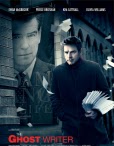
There’s sort of an irony as to Polanski’s writing and his direction – but he knows what he’s doing. He opts for a literal thriller-ish nature to his direction which means that the screenplay must be the opposite, and it is. It’s constantly subtly, and almost always unassuming despite its intelligence. That ends up being the quality that serves it best when it comes to that final dénouement where everything unravels so beautifully.

On the most obvious it is not the screenplay that’s responsible for all the cool things going on in Let Me In, and yet what Reeves creates on the page is necessary. It’s probably one of the barer screenplays of the year as it is – ideally – a bit of paradigm for the film itself and in that light the meticulousness of the entire exercise is commendable. I wouldn’t necessarily agree that less is more, but it’s an asset here.
It’s seamlessly adapted from the play it emerges as, perhaps, the most significant facet of this already well made film. Nicholas mentions in his review how we’re eased into every important situation, and that’s something important which can’t be overstressed. He’s careful to maintain a realness to the situation while managing to ensure that everything that happens has some reaction that maintains the realism and takes the story forward.
Scott Pilgrim vs the World has such a strident way to it so that it’s a bit difficult to single out a specific entity as its champion and in that light I’m unsure that I would champion its screenplay – and yet Wright’s adaptation is a significant as to why Scott Pilgrim manages to survive the journey from comic book to cinematic entity. It manages to be socially conscious without overemphasis on pop-culture fanaticism and it’s youthful without being pretentious. And, of course, it’s consistently hilarious – even when it succeeds with those singular moments of poignancy.
His droll dialogue, incidentally, ends up becoming a detriment to the praise he deserves since he’s doing more here than just providing witty lines. He fools you into thinking that he’s doing something especially newfangled on his own, when he’s just using old paradigms to create something classic and fresh at the same time. He deserves credit for never making the deposition scenes come off as retrospective as they could have been and ensuring that they are the foundation of the screenplay without making becoming pretentious.
SEMI-FINALISTS: Winter's Bone, True Grit
Which screenplays impressed you most this past year?
Thursday, 13 January 2011