|
|
|---|


Showing posts with label 1961. Show all posts
Showing posts with label 1961. Show all posts
Saturday, 3 April 2010
Wilder and Lemmon had their thing, Kazan had Brando, Cukor had Kate, Scorsese had DeNiro and then DiCaprio and Stanley Kramer had Spencer Tracy. Being the benevolent man I’ve heard, Spencer Tracy probably thanked heavens for Stanley Kramer. An excellent actor when given the chance, no other director has consistently pulled greatness out of Spencer. From Guess Who’s Coming Dinner, to Inherit the Wind and this magnum opus Judgment At Nuremberg. Although Inherit the Wind is my favourite stand alone Tracy performance, I always return to Judgment at Nuremberg when I think of the good work the two have done together. Sure it got steamrolled by West Side Story, and all (undeservedly in a few categories) but I still remember Judgment at Nuremberg, fondly (well as fond as you can think of a film so harrowing). It should be ranked atop the list of great films with all those other classics of the era.

The thing is though, I can wax on for pages about Spencer’s excellence – I’m an ardent admirer; but as brilliant as he is here it’s Maximilian Schell that deserves effusive praise. This would probably rank high on a list of Oscar shockers. I’m not sure who was the buzzed winner, but Max’s win (his nomination even) is not indicative of what we usually associate with the Oscars. In fact, the same year the Supporting Actor performance went to the George Chakiris’s obnoxiously loud Bernardo (a variation of Shakespeare’s Tybalt). I don’t think subtlety really begins to describe Max here. Yet, it’s not an understated performance in any way. In fact, it’s probably more strong supporting than actually leading – but that’s just opinion. Max’s performance ranks as one of my favourite decisions from Oscar and he and Tracy are both memorable here.
I wouldn’t say I’m smitten with Judy Garland – the actress, but few of her performances touch me as much as her turn here. It’s not wholly loved, but I don’t care. It’s a bizarre performance from her, when we think of the screen characters we associate her with. Irene Hoffman is a woman who has gone through a number of trials, in a way it’s a perfect fit for Judy who was at her lowest (it was only a few years before her suicide). She was never the greatest technical actress, but what she was able to do was connect with the sensitivity in her character. She does this here, excellently. Montgomery Clift, with just a few minutes of screen time gives another great performance and Marlene Dietrich is brilliant, as always.
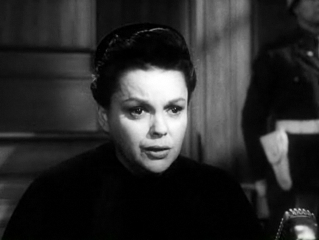
Judgment at Nuremberg is a brilliant piece of cinema. It’s based on true events, and unlike so many stories of the war it deals with the aftermath – something we rarely see. The entire film permeates with a tension that’s almost overwhelming and the black and white only adds to the apprehension. Kramer did his best work here, and even though he’s rarely remembered today when we think of the greats – his brilliance is assured. Judgment at Nuremberg probably isn’t that cheerful, but it’s still an excellent piece worthy of your time. It’s #46 on my list of favourites.
Tuesday, 8 September 2009
Had he been alive yesterday, would have been the birthday of the great Elia Kazan. So in honour of this I decided to feature a write-up of one of his films which also is a part of my top 100 – Splendor in the Grass. Ranked at #61. Splendor in the Grass is a movie about sex…well about as much as a movie in 1961 could be about sex. The film is from the sixties, but the story is not archaic. Deanie and Bud are the ‘it’ couple at their high school. Deanie is a good girl and the film opens one night happening upon a passionate make out session in the back of Bud’s car. Yes, it’s the sixties, but this film is credited with the first onscreen French kiss, just so you know. So it’s that kind of movie. Of course Deanie isn’t sure where she wants this to lead and she rebuffs her boyfriend’s overt advances. A sexually frustrated Bud drives her home. Deanie and Bud are from opposite sides of the tracks. Deanie is the daughter of a weak store owner controlled by his wife. Bud is the son of the most prestigious family in the area. His sister is notoriously lost cause even having an abortion back in her day, so the family’s hopes rest on him.
The basic conflict of the first half is the ‘will they, won’t they’ debate. It’s clear that Bud and Deanie want to have sex. And with how Elia Kazan shoots the film it seems there would be no better solution but for them to just do it. But this is the sixties, and Deanie’s mother is nothing if not clear. She tells her daughter “Your father never laid a hand on me until we were married. And, then, I—I just gave in because a wife has to. A woman doesn't enjoy those things the way a man does. She just lets her husband come near her in order to have children.” How incredibly primeval. It’s downright scary. Needless to say, they don’t have sex and when at his father’s advice Bud finds a girl to satisfy those physical pleasures…well, it doesn’t turn out too good. Especially for Deanie.

Natalie Wood is on fire in this film. She earned an Academy Award for Leading Actress and the film also won the Award for Original Screenplay. I figure actually that Wood should have won the Oscar, though I haven’t seen the winning performance. What’s even more unfortunate though, is the lack of love for this film in the main categories. Eliza Kazan is ignored and it’s not difficult to see why. Not only does this film push the envelope when it comes to sex in the movies [Boy, if they could see us now.], but this is a high school flick and we all know the Academy must maintain its standards. But even they weren’t giving it a nod for Best Picture, a Best Director nod was wholly deserved.
It’s impressive that this was Beatty’s first performance. As good as his directing work is I always think he’s a better actor. He and Wood are sweltering together and no doubt the audience is affected by those two hours of sexual tension. I may be incredibly wanton but I can’t help but think had they just jumped into bed Deanie and Bud would have been way better off. Kudos to Elia Kazan for directing one of the few (only?) high school films where it seems that having sex really would have solved the problems.
The title of the film is inspired by one of the lengthy Wordsworth odes. The famous lines read “Though nothing can bring back the hour Of splendour in the grass, of glory in the flower; We will grieve not, rather find Strength in what remains behind;”. Every time these lines were mentioned in the film there seemed to be an especially sad feeling about. The name of the film is no accident. As that last shot of the film falls and Deanie rides off in the car, we know that she and Bud will never experience those moments of splendour in the grass. And William Inge’s screenplay is bitterly ironic. The comfort that remains is inadequate at best.
English spelling ‘Splendour’. Film name - American spelling ‘Splendor’
Subscribe to:
Posts (Atom)