|
|
|---|


Saturday, 6 March 2010
I forgot to tell you folks, head over HERE and vote in my recent episode of LAMB Casting. Polls are easy and anonymous so feel free to click away...don't worry Meryl won't know you're trying to replace her...

Well, Oscars are tomorrow and I didn't want to post these after. It's my own edition of "If I Had A Ballot" - even if I'm not the best judge in some categories. Still, see what my picks look like in the MAIN CATEGORIES and the ARTISTIC AND TECH CATEGORIES.

Bright Star 11
Nine 7
An Education 6
Avatar 6
The Messenger 3
Cheri 3
The Road 2
The Hurt Locker 2
The Fantastic Mr. Fox 2
Three Blind Mice 2
Coraline 2
Star Trek 2
Drag Me To Hell 2
In the Loop 1
The Lovely Bones 1
Moon 1
Harry Potter & the Half Blood Prince 1
It's weird that something like The Hurt Locker which I liked only earned two medals, but oh well. Yay, for Bright Star though...thought it didn't win.
Tell me what you think? I want to hear your thoughts.
I’ve been very against type this awards season. Even for me. I’ll be concluding my year in review picks soon and you can already see they’re different from the usual awards’ pick, and since most people seem to agree that (for the most part) the awards’ picks are the right picks I’m pretty much out on a limb. Still, if there’s one of the main picks I can get completely on board with, it’s this one,
#11 Carey Mulligan in An Education (2009)

After my pandering reviews of An Education someone asked why I liked Carey’s performance so much. I couldn’t come up with an answer. She is, after all, on my list of favourite performances this decade…but still…I can’t encapsulate it. I like Meryl’s because she’s subtle, Catherine because she’s fearless, I admire Julia’s tenacity and on and on. But, I can’t pin down my appreciation of Carey’s Jenny down to a particular x factor. If pushed, the biggest compliment I can pay her is that I feel as if I’ve known Jenny for years. Carey’s performance comes forth in the little things, like with the people you know. You don’t think of your friends in terms of good or evil, it’s the little things – and it’s the same with Jenny. It’s like a moment early on: Graham’s appearance at that catastrophic tea party. Scherfig realises the talent on her hand and even at moments that are seemingly inopportune moments the camera focuses on her. When Graham says “I’ll probably take a year off, do a bit of travelling” – the wince on Carey’s face, almost imperceptible, is beautiful moment from hers. Or earlier, as the stupid boys Graham at the Youth Orchestra her withering glance at them is not accidental but not exaggerated

The challenge that Carey is faced with is to balance Jenny’s maturity (scholastically) against her immaturity on the more worldly aspects of life. She is overwhelmed by David. Notice how her face lights up as she meets him (for the second time) on the road. I love how thrown she is when he enquires about supper – “The trouble is, we’ll already have eaten”. I love the juvenility of her line reading hair, regardless of how we perceive David to be (the best of us probably no he’s no good from the inception) Carey sells Jenny’s infatuation with him, and she makes it so fluid that we don’t doubt that this was the same young lady who was just “…I’m going to smoke and listen to Jacques Brel and wear black…” I say it all the time, but I love it when an actor can convince us of the unsaid. When we’re so under their spell that we believe we can hear their thoughts – that’s when the performance becomes convincing for me, and that’s what Carey does.
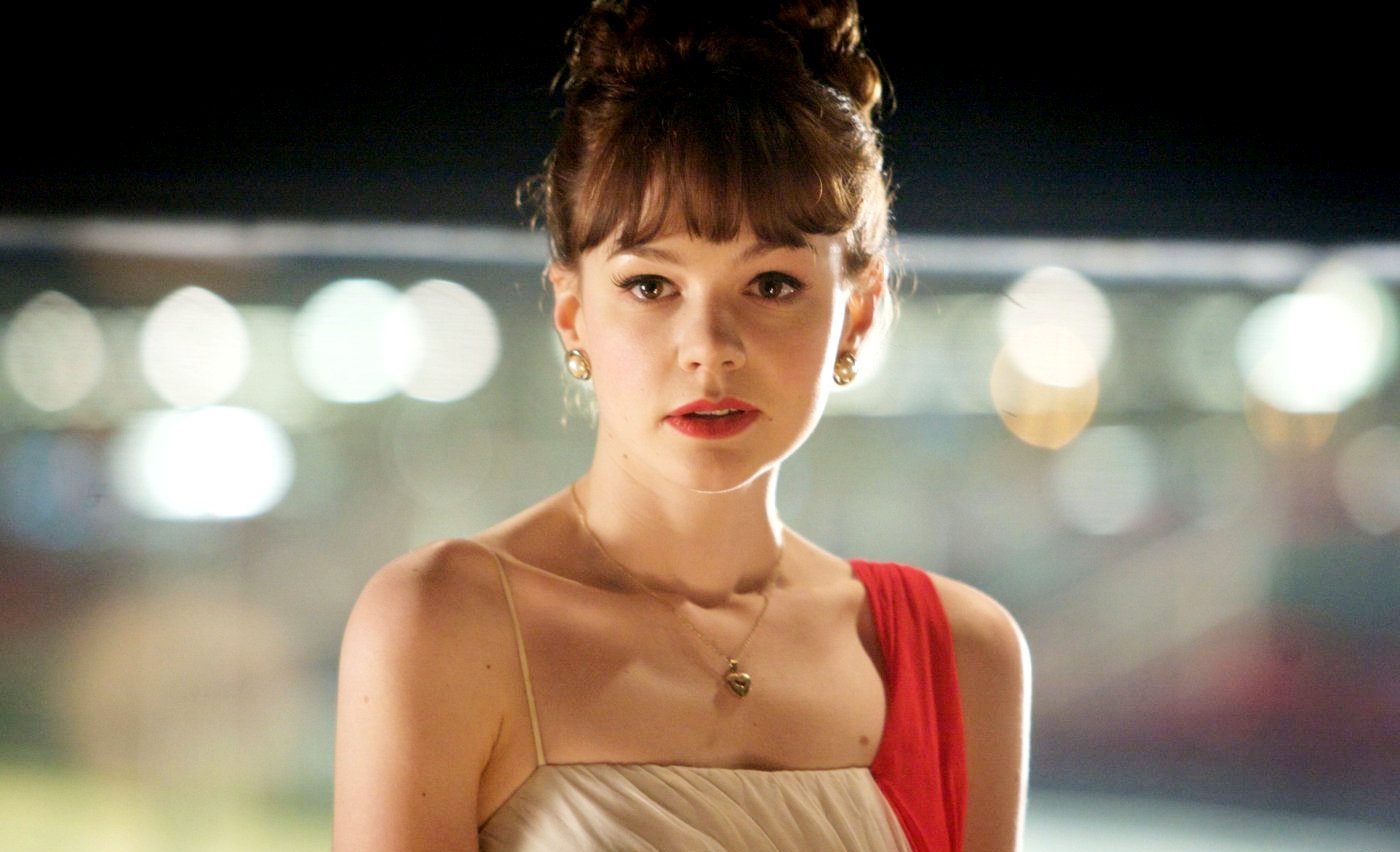
The pivotal scene opposite Emma Thompson comes up so often in conversations about Carey that the goodness of it has become somewhat incidental – but it isn’t. It’s not that Jenny has suddenly become fearless, but it’s a slow build-up as she realises that Mrs. Walters – even – is not as imposing as she seems. Her reading of “And you’re aware, I suppose, that our lord was Jewish” is slow and deliberate, as if she now realises who she’s dealing with. Of course in a year of so many great performances that other monologue is the one everyone’s remembering, but you know where my allegiances lie. Every time she reaches “there’s no life or colour in it or fun in it.” I pause to think, it’s not just lines but true feelings. Of course her sincerity here only makes the actual end culmination more unfortunate. It’s the reason that I like the film so much. It seems so common from a distance, but it’s not glib but completely sincere. The film is completely Carey’s and even the moments that are not truly hers – like Alfred’s confession – still focus on her. Her flood of tears is as moving as his poignant ‘confession’.

But I’m not saying anything new here, you know that I am smitten with Carey’s Jenny. But what say you? Worthy of a spot in the top 15 or no?
Friday, 5 March 2010
I liked the nineties more, even if I can’t remember them clearly (I was a babe) and even if I need to see more films from the period. Still, one thing about the aughts is seeing how many actors made their mark as inventible screen presences. Does anyone remember the guy who played Jude Law’s ally in Cold Mountain? I mean, he made my shortlist, but I don’t think anyone was expecting that guy to turn into one of the most important actors of the last half of the decade racking up three (almost) consecutive nominations – and a win, too. Personally, I think he’s brilliant. Yet, he was snubbed for his greatest contribution this decade – at least I think so.
#11 Philip Seymour Hoffman in Before the Devil Knows You’re Dead (2007)

Before the Devil Knows You’re Dead opens unceremoniously. Philip Seymour Hoffman and Marisa Tomei are having sex in what looks like the least romantic of styles. Lumet never was afraid to shock us and Before the Devil Knows You’re Dead is a close look at a family more pervasive than the usual family drama. It’s the kind of film where perspective is difficult to attain until we’ve stepped back and examined the entire film after the credits have rolled. Hoffman has always had the ability to unnerve the audience, his excellent Capote was a bit too suspicious and even though he made Father Flynn congenial enough the cards were already decided and there was no need to doubt his guilt. It’s this intimidating manner of his that he uses to full effect as Andy Hanson.
Andy is a tyrant in some ways and this is most perceptible in the brilliant scenes opposite Ethan Hawke. Hoffman has a way with flashy dialogue and from the most superficial of levels he thrives here. But, what makes him so invaluable to the screen is his ability to turn the tables. Forced to pin down one scene in particular to validate Hoffman’s inclusion on the list – I’d have to single out the tour-de-force battle against Albert Finney (playing his father). Someone said once it was like watching two wild animals go at it, and when it comes to the ferocity they’re not wrong. The similarities between Finney and Hoffman are not inadvertent and Hoffman’s breakdown is brilliantly executed. It’s unnerving, but in a different way. Notice how Maria Tomei is almost repulsed by the show of emotion in the car. Her Gina is notoriously weak and can’t handle this breakdown. I love how Hoffman responds in turn to her noncommittal reaction. Or how he goes to his drug supplier - so broken. But still not humane enough for us to feel anything other than discomfort.

Before the Devil Knows You’re Dead is – after all – a film about dealing with personal demons when life twists your life up. Hoffman’s confrontation with the conman at the end is brilliant like all else, it is in some ways more of a showcase for Hawke but even when he’s not the centre of the scene he never plays second fiddle. It’s a scarily brilliant turn and it’s a pity that such a well made film with all these great performances was ignored. Philip Seymour Hoffman has made some indelible contributions to cinema in the last decade and I only hope that he continues to be as prolific in this one. He’s not the typical leading man, and it’s strange when an actor hits their stride at his age. But he has the talent to pull it off.
Were you impressed by PSH in Lumet’s recent film? Or does another of his performances impress you?
Thursday, 4 March 2010
The cool guys over at Ross v Ross invited me, along with a couple other bloggers to battle out the 2005 Picture race with them. It was fun, even though I suppose I had the easy task of defending Brokeback Mountain. Check it out here. Did you think that of the five Brokeback Mountain was obviously the best, or do you disagree with me?

You know me well enough by now to realise I’m not averse to honouring some of the more maligned performances if they work for me. It is (as they say) what it is, and when I like it – I like it. Still, it’s not like I think they’re bad otherwise I wouldn’t like them. Still, there are quite a few performances I like that haven’t caught on, but this is one of those that’s a head scratcher for me. I never can understand what’s not to like about this performance since it’s so obviously good. Isn’t it?
#12 Catherine Zeta Jones in Chicago (2002)

I don’t know what it is about the Supporting Actress Oscar but it seems to attract bitchy women; well not bitchy but definitely opinionated. Since Jolie’s psychotic patient we’ve had strong willed artists, strong willed drifters, strong willed actresses, strong willed human rights activists. With the exception of Jennifer Connelly – it’s been a long line of strong willed ladies and it’s not difficult to see the attraction. Who doesn’t love seeing an actress sink her teeth into a nice, juicy diva-esque role? The thing about these roles is that as much as you need to ascertain the almost theatrical behaviour of your character you need to fill in the edges and make the character ring true – and Catherine does.
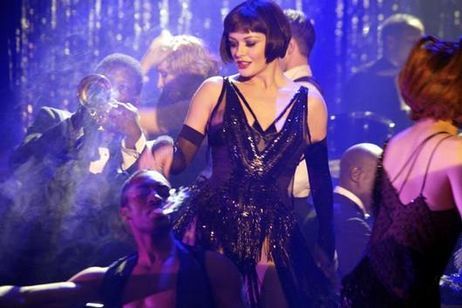
It begins with “All That Jazz” – acting in musicals is not about being a great singer. I’ll attest that, even if some will disagree, but having a good voice is not a throwaway either and Catherine has some amazing chops. The things is, unlike a recent singing Supporting Actress winner Catherine doesn’t sing, then act, and then sing again; she does it in tandem: which is why the performance works. Marshall and Condon do really take a gamble with Chicago because within twenty minutes so much goes down that it’s easy to miss it. We know Velma has murdered someone – the blood on her hands…we can fill in the blanks – and when the police enter the club during her performance I love the awareness on Catherine’s face as she notices them, which immediately segues into the line “No, I’m no one’s wife but oh I love my life”. Sure, it’s part of the song, but that look on Catherine’s face is an excellent acting moments. Right there, she’s filling in the blanks and we’re not even realising it yet. She still has much heavy lifting to do.

Heavy lifting like “Cell Block Tango”: a number that depends on her candour and her ability to showcase Velma’s ego and talents. I remember while listening to the DVD commentary Marshall remarked on how in touch with the character Catherine was. The moment in "Cell Block Tango" as she’s telling her story and she poses for the camera as the light bulb flashes. It’s almost an offhand moment, and also an improvised one. Still, it’s completely Velma: still the star even while playing the victim. She’s so caught up in her own game she’s unable to draw the line between the role and herself. It’s her crowning glory and it’s her crutch, and Catherine knows this. As despicable as Roxie is, can you really trust anything that Velma tells you? She’s a savvier diva than Ms. Hart, which is what makes her so dangerous.

I like Chicago a whole lot, you already know that. I’ve probably said it before, but my favourite moment in the film is probably the one that should work the least. As a scene being read “I Can’t Do It Alone” doesn’t really work with the film. It’s more performance than plot driven and could be excised without a glitch – just have the lines spoken – but when Catherine reaches that zenith of performance it’s all outstanding. It’s my favourite part of the film. The raw emotion packed into this number, the oozing sexuality mixed with the heightened desperation is pathetic and scintillating all at once, and it never feels phoned it. She’s never just singing, or just dancing, or even performing. She is being Velma Kelly. As she flutters through the courtroom, performs the (unfortunately) deleted Class and that final spoken moment, her reaction to the torn stocking – another moment that’s really not that *big*, but that’s the thing that makes me wonder how she’s become so underappreciated. She sells us the big moments, boy does she sell them. But when she needs to get subtle, when she needs to sell the want with her eyes Catherine delivers. It’s not just a good musical performance – or a good singing performance. This is a brilliant acting foray. Catherine Zeta Jones IS Velma Kelly. Say what you want, but I’m a believer.
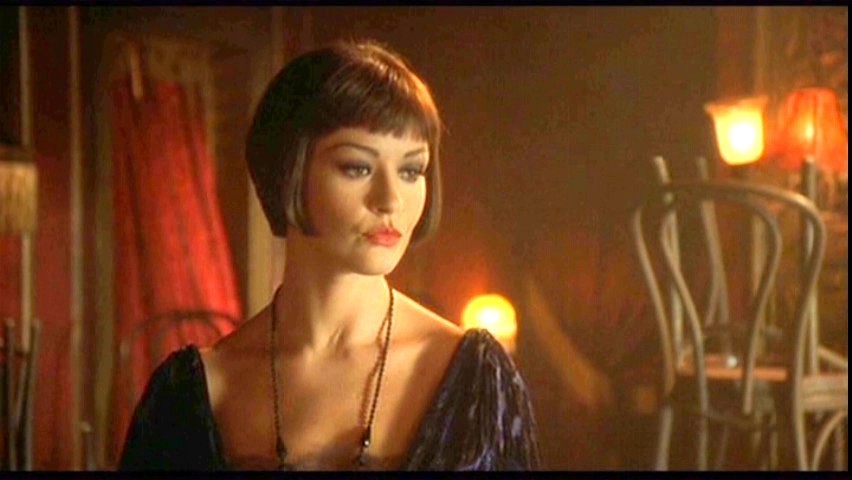
But have at it? How does she measure up in your opinion? Excellent or passable?
Tuesday, 2 March 2010
I'm still having some technical problems so I've been sort of a phantom presence on the internet. Sorry. If all goes well I'll finally be releasing the winners of my Encore Awards on Saturday. I know you're probably dying to know the results. I'll be back later in the week (hopefully sooner, like tomorrow) I'll be back continuing my Decade in Review: Performances - which have been as atypical as I am. My next performance (back to the women) will be my only musical citation. So whoever pops up next is my favourite musical performance of the decade? I know who mine is? Who do you think it is? Or better yet, what's been your favourite musical performance of the decade?
Subscribe to:
Posts (Atom)